
Hatterwan Architects: Conservation, Craft and Contemporary Living
Hatterwan Architects:
Conservation, Craft and Contemporary Living
Some architectural practices pursue a recognisable aesthetic. Hatterwan Architects resist that impulse. Their work is shaped instead by context and exchange – between cultures, climates and ways of living.
Based in London and working both across the UK and internationally, the RIBA Chartered studio led by Klara Wan and Mark Hatter moves fluidly between conservation projects, residential commissions and hospitality spaces. Rather than imposing a house style, they focus on proportion, material integrity and spatial clarity.
That sensitivity to context and exchange comes into focus in Highgate House, North London, where a three-storey 1930s house has undergone a substantial architectural transformation, culminating in a sculptural master suite set within the roof volume.


Klara Wan and Mark Hatter, Hatterwan Architects.

Two Perspectives, One Practice
Q. You first crossed paths while working at the same London practice. How did that evolve into Hatterwan, and how do your backgrounds complement each other creatively?
A. We were working within the same practice, although not working directly together. That gave us the chance to observe how the other operated before deciding we could collaborate successfully.
We both consider ourselves generalists. Either of us can run a project independently, but having a second pair of eyes to review and occasionally challenge an approach often leads to a stronger outcome.
Q. Klara, you trained in Singapore and at RISD, and Mark, you trained at The Bartlett. Both of you have also worked with some of London’s notable practices. How do those formative experiences continue to shape Hatterwan today?
A. Many of our projects involve an element of ‘exchange’ between places. A client may be based abroad but building in London, or we may be designing a project to be realised in another country. As a result, we are often negotiating differing cultural ideas of domesticity and languages of design.
Some notions of what is ‘comfortable’ or familiar differ greatly between hemispheres, while others feel more universal. Being exposed to those differences encourages us to question assumptions and remain open in our approach.
“Some notions of what is ‘comfortable’ differ greatly between hemispheres, while others feel more universal.”
That sensitivity to cultural nuance translates directly into the way Hatterwan approach domestic projects. For them, the success of a home lies not only in its architectural clarity, but in how it accommodates everyday life.

Hampstead Townhouse, Camden – a carefully replanned lower ground floor where extension, rooflights and full-height sliding doors combine to bring daylight and garden views into the heart of the home.
Emotion, Trust and the Fabric of a Home
Q. When a client first walks through your door, what does that initial conversation look like? What are you listening for, and how do you begin shaping a design narrative from that first spark?
A. The first priority is establishing a personal connection. Much of our work involves family homes and small businesses, where clients are quite emotionally invested in the project. Clear two-way communication and mutual trust are essential, particularly once a project moves into the more complex stages of the build.
When working with new clients, it’s also important to understand how much experience they’ve had previously with construction projects. Someone who has refurbished several properties will be comfortable reading drawings and familiar with the rhythms of a build. Whereas clients who are refurbishing a home for the first time may need more context and reassurance to make informed decisions. Recognising that difference helps shape how we guide the process.
Q. Many architects speak about context. In London that often means conservation areas or listed buildings, while elsewhere it may be about emotion or atmosphere. How do you balance place, heritage and lived experience when shaping a home or hospitality space?
A. With refurbishment projects, it is crucial to understand what attracted a client to a property in the first place. Interventions should not undermine that original appeal. Sometimes it is the location and views that matter most, and the interior can be treated as a blank slate. In other cases, particularly within listed buildings or conservation areas, the character of the spaces needs to be preserved, with more subtle adjustments made to meet the client’s requirements and desires.
The length of time someone will spend in a space also influences how it should feel. Spaces that are visited briefly, such as restaurants or holiday homes, can be quite scripted with a strong, bold personality. In contrast, a home in which someone lives daily life often benefits from being more neutral and layered, allowing its character to develop gradually over time.
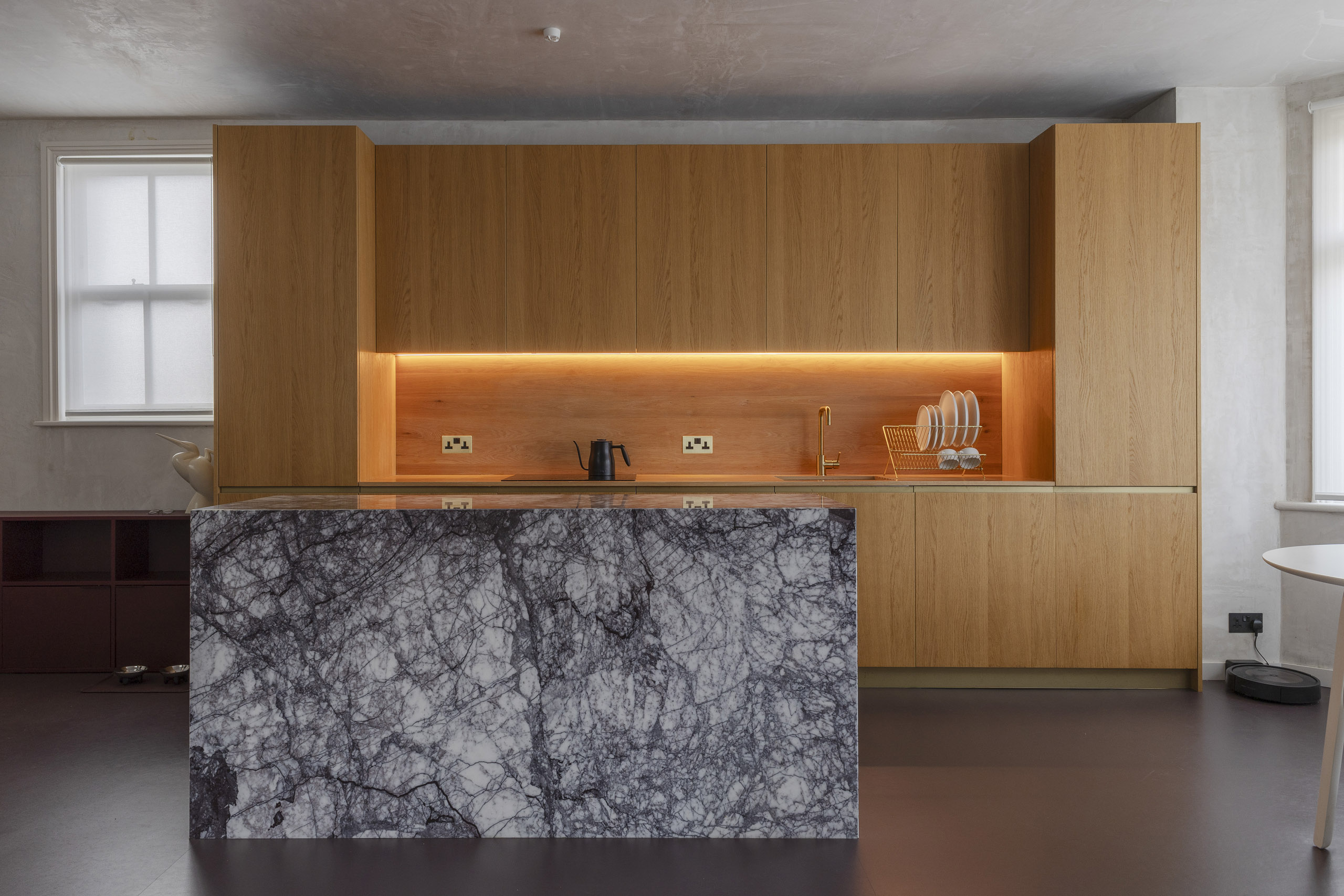
Willesden Green loft conversion – an open-plan kitchen anchored by a Turkish marble island and oak joinery, set against a restrained palette of plaster and linoleum.
Q. Do you feel Hatterwan has a signature aesthetic, or is the look of each project purely a response to its context and client?
A. While certain stylistic threads run through our work, such as modern, minimal detailing paired with a rich material palette, we allow each project to evolve its own aesthetic rather than imposing a predefined ‘look’. The design process could become quite repetitive if the same moves got wheeled out for every scheme.
We approach the design process as a collaboration with the client, encouraging them to provide a starting point (be it an image or verbal description), to develop from. A client who feels listened to in the early stages, is likely to be more receptive to developed proposals later on.
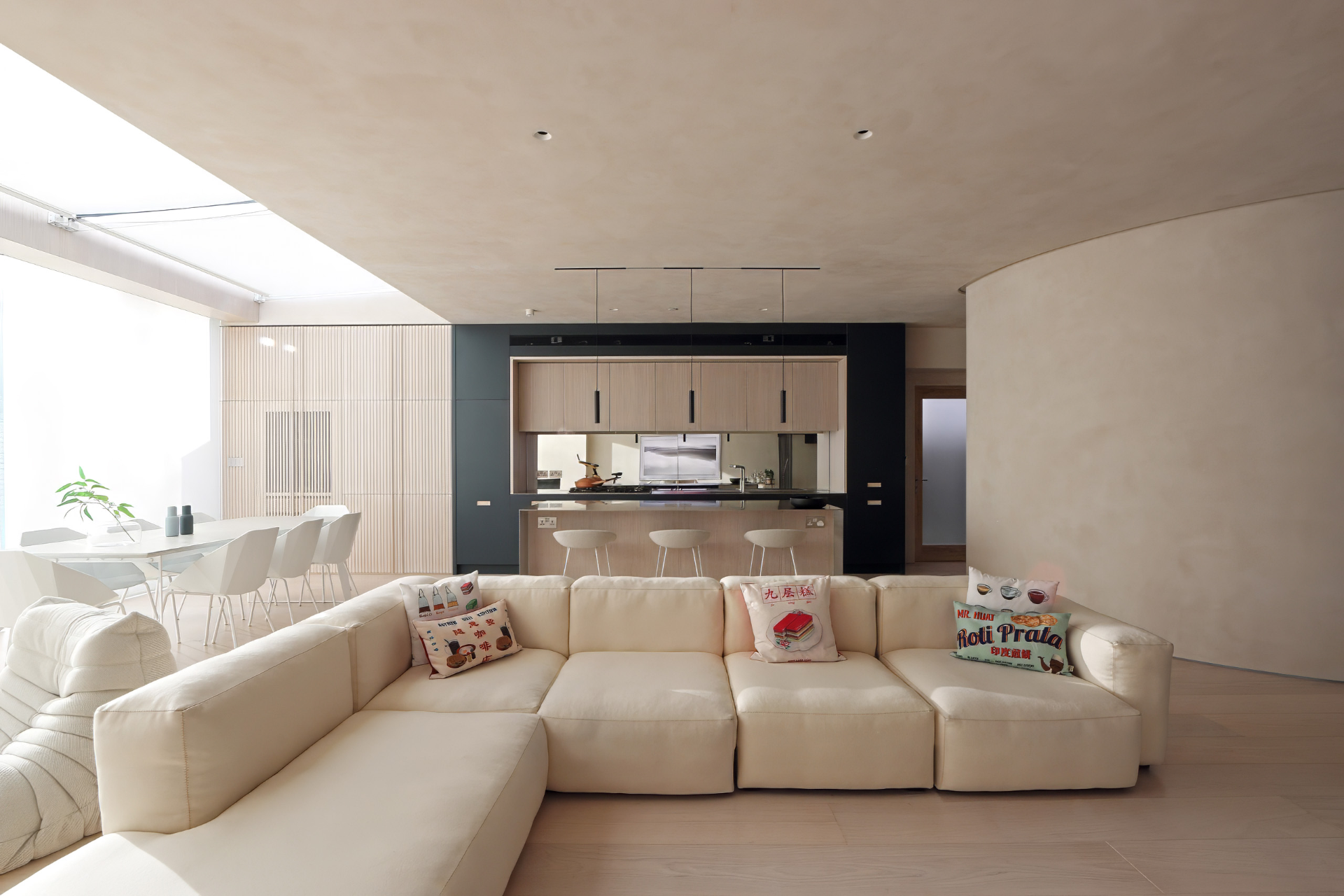
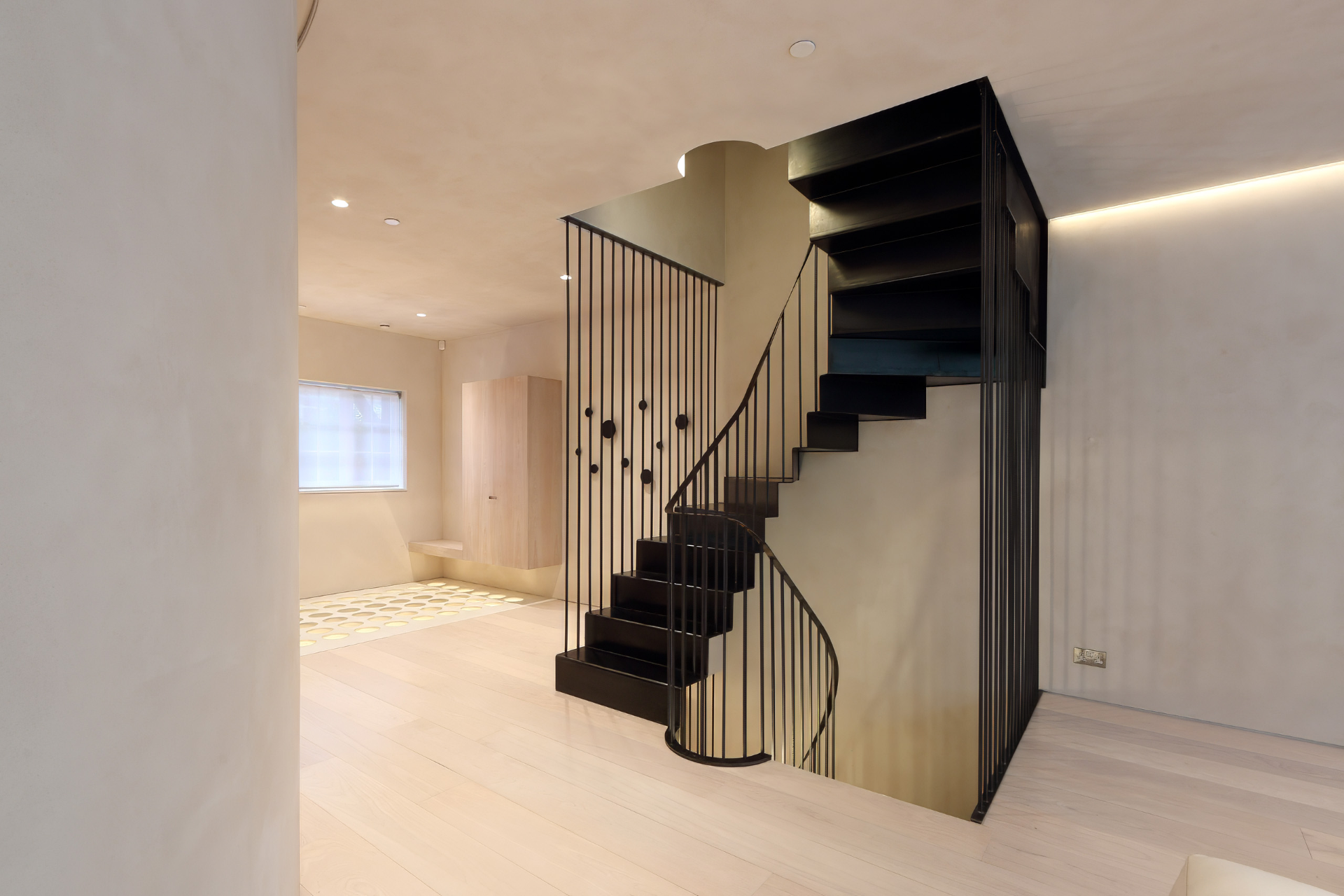
Highgate House, North London - a substantial architectural transformation introducing a sculptural stair core and expansive glazing, bringing daylight deep into the plan and strengthening the connection between living spaces and garden.
It is in Hatterwan’s Highgate House renovation that these ideas come into sharp focus. Set within a conservation area in North London, the project involved a careful reworking of a 1930s house, balancing respect for its setting with a more contemporary spatial language.
At the top of the house, the master suite was conceived as an open volume within the roof structure, flooded with light from a large picture window overlooking the nearby gardens. The space needed to feel calm and cohesive, yet strong enough to hold a series of sculptural elements in open plan. Within this open plan composition, the Riluxa bath and basins read as sculptural forms within the architecture, not simply functional elements.
Within this setting, the bathroom moves beyond utility and becomes part of the architecture itself.
Bathroom Design at Highgate: Working with Riluxa
Q. Bathrooms have evolved far beyond purely functional spaces. In your view, what elevates a bathroom from merely beautiful to truly memorable?
A. Bathrooms are among the most intimate spaces we design. A person is at their most impressionable when they stumble, half awake, into the shower first thing in the morning. In that state, even a minor defect such as an awkward tap, a harsh light or a whining extract fan can become a major irritant. A successful bathroom is one that can be used without effort and offers calm and comfort almost unconsciously.
Clients often ask us to replicate a hotel suite they’ve enjoyed. In those cases, it is important to ask whether it was truly the design that appealed, or simply the fact that the bathroom was cleaned and serviced by someone else on a daily basis!
“A successful bathroom is one that can be used without effort and offers calm and comfort almost unconsciously.”
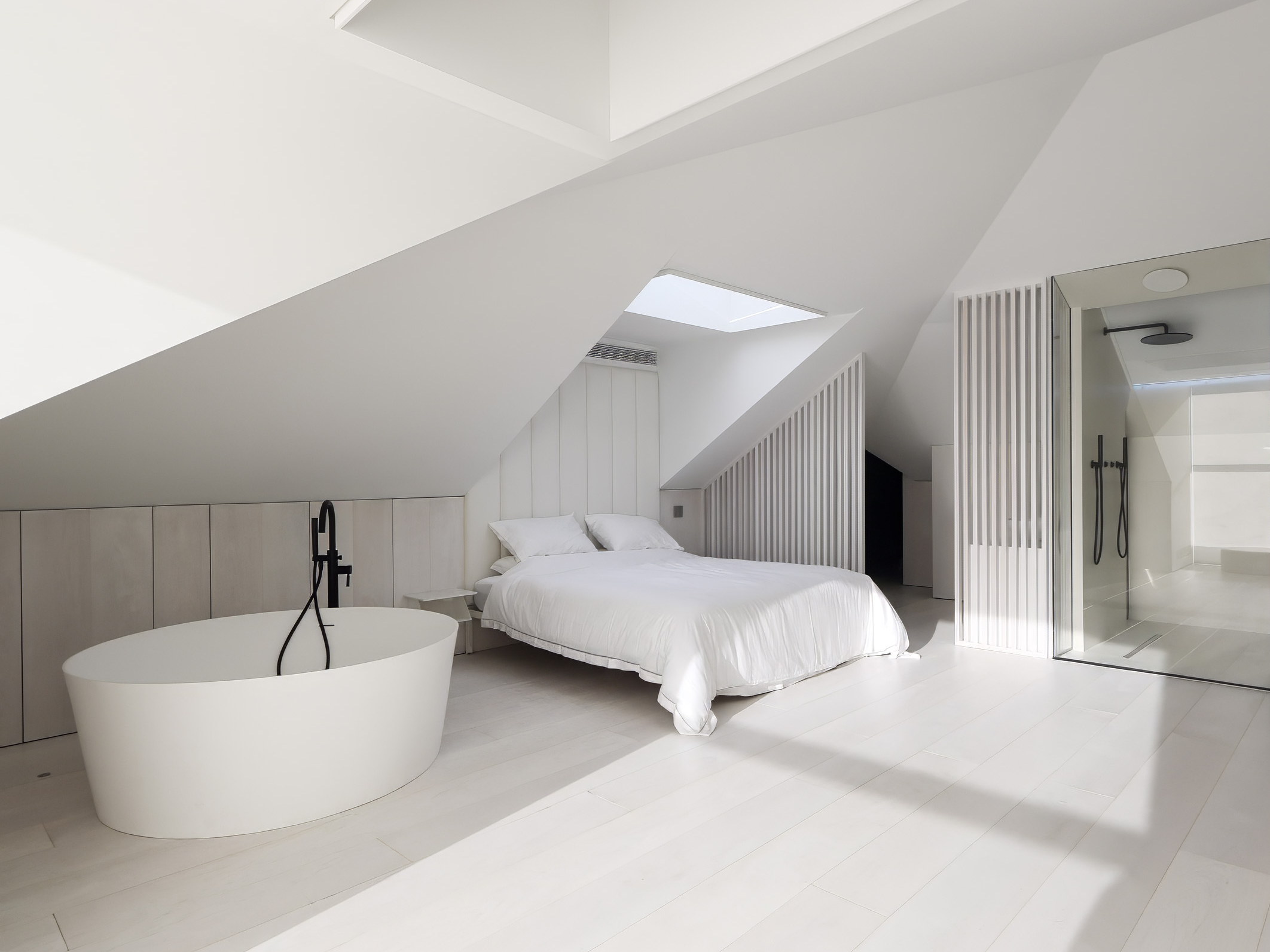
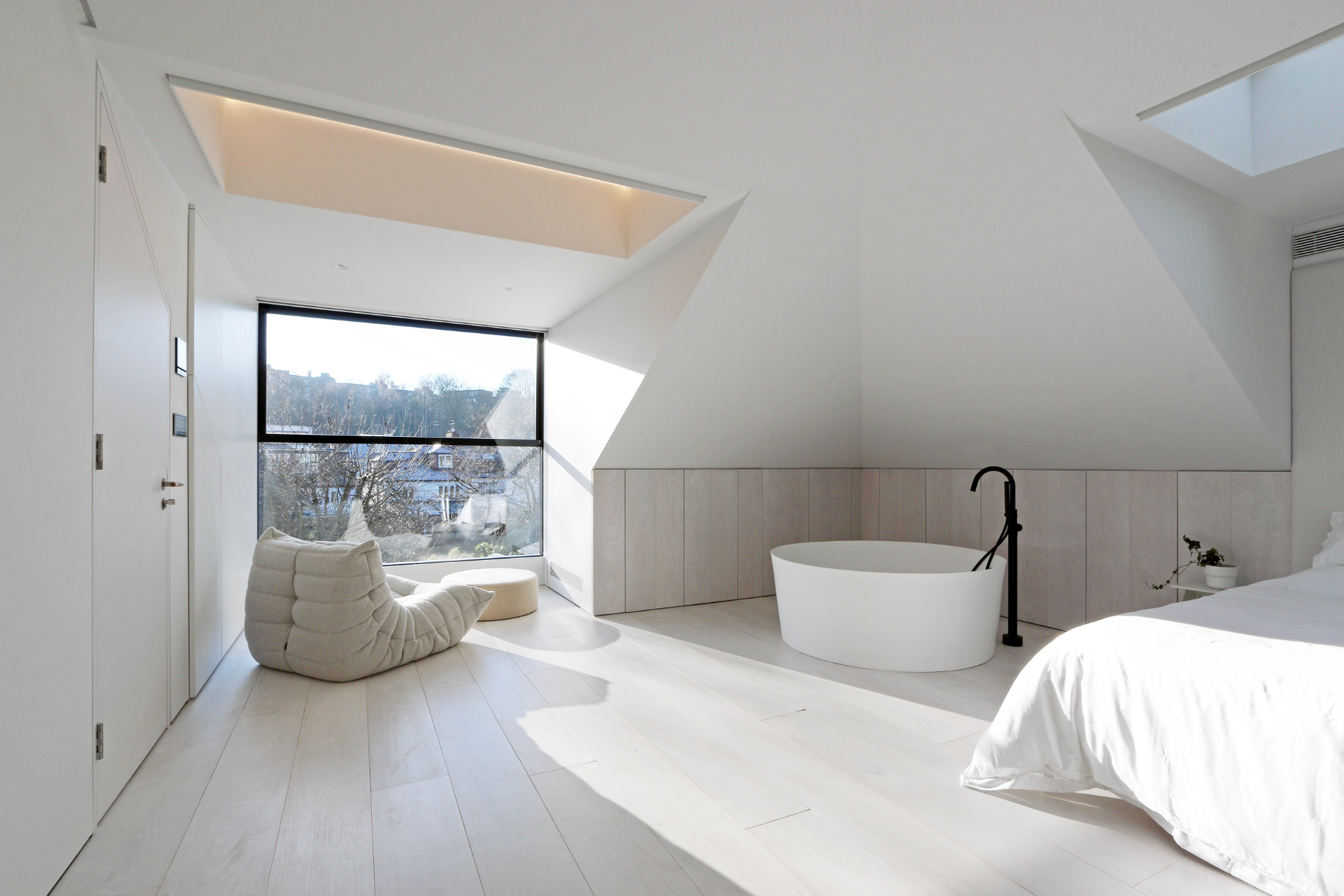
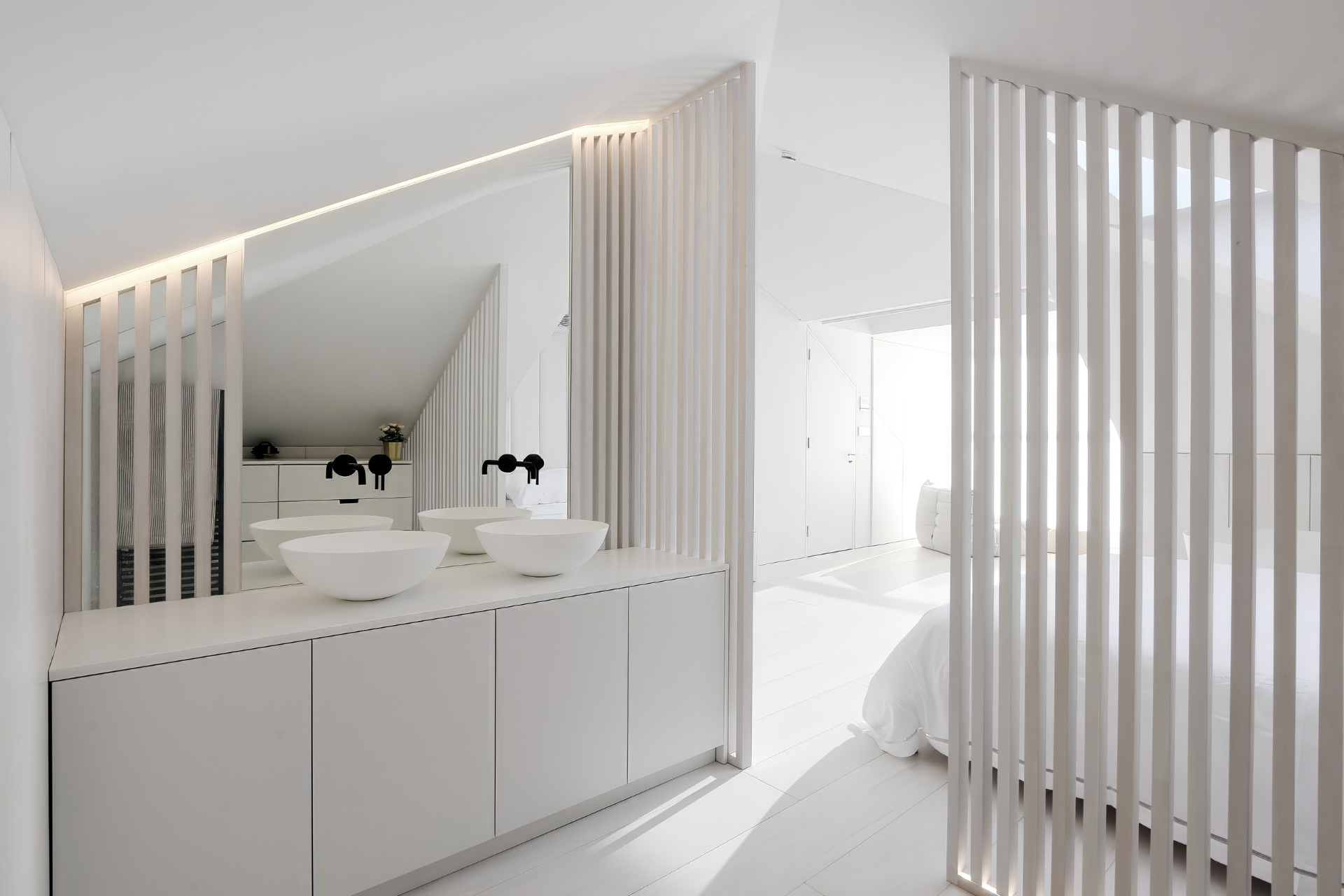
Osaka Freestanding Bath and Lyon Countertop Basins by Riluxa, crafted in Mineral Stone. Highgate House, North London.
Q. In the Highgate House master suite, the bathroom elements sit within an open plan roof volume. How did that influence your choices?
A. Because the elements were open plan and dispersed throughout the master bedroom, they needed to hold their own as sculptural objects. A circular Osaka bathtub was selected so there was no ‘front’, allowing it to address the space from all directions. The Lyon countertop basins were chosen for a similar reason, both for their sculptural quality and for their ability to sit comfortably within a palette of whites.
The suite itself occupies the roof volume and looks out across nearby gardens through a large picture window. To emphasise the sense that the space floats above its surroundings, we developed a scheme of textured whites and near whites. Double-white oiled timber flooring and wainscotting sit alongside poured rubber in the wet areas, while soft furnishings such as headboard and loose furniture fabrics echo the tones of the joinery. The sanitary pieces become part of that restrained composition rather than standing apart from it.
Q. When selecting materials and finishes for a refined residential bathroom, what principles guide you?
A. Appearance and tone are important, but performance is equally critical. Materials need to insulate or conduct heat appropriately. Conductive materials like natural stone, for example, work well with underfloor heating, while softer materials like a poured rubber floor may suit a space heated by radiators. Tolerance to humidity must always be considered, particularly in smaller rooms.
Build quality is paramount. Cheaper fittings can create long-term issues. Ease of maintenance matters too, but it should not come at the expense of design. The spaces that are most carefully maintained are often those a client enjoys most.
From Singapore to North London
Q. Looking back, was there an early project that feels particularly important in defining who you are as a practice?
A. One of our earliest projects was a large new-build house in Singapore. It gave us the freedom to explore ideas that have resurfaced in later work. Strategies such as organising spaces around a central courtyard, introducing an open sculptural staircase, bringing daylight into a basement, and creating diffuse boundaries between building and landscape were subsequently adapted to different scales and climates.
Those strategies continue to evolve, but the underlying interest remains the same: creating continuity between interior space and its surroundings.
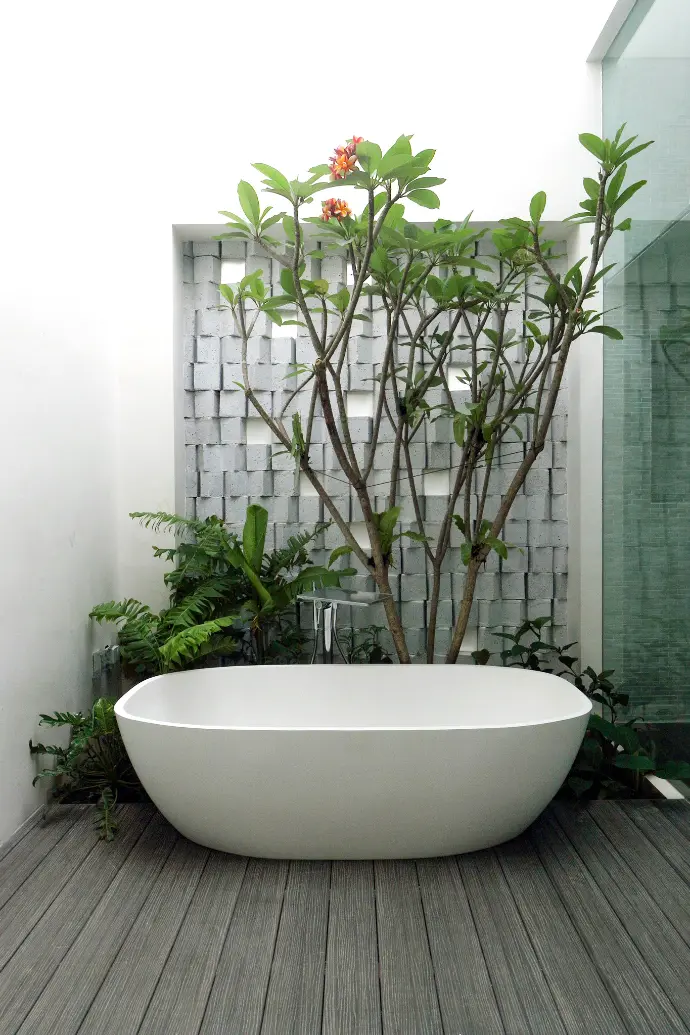 A freestanding bath set within a planted lightwell in a three-storey detached house in Singapore, gently dissolving the line between inside and out.
Q. Your recent projects range from conservation work in Edinburgh to hospitality spaces in Mayfair. How does that diversity shape the practice?
A. We’ve recently completed the remodelling of a large, listed house in Edinburgh and have a number of private residential projects underway in London and elsewhere in the UK. Alongside these, we are developing a series of restaurants in London for a Malaysian client.
Moving between typologies keeps the work fresh. A subterranean bar in Mayfair demands a very different atmosphere to a London townhouse in Hampstead, yet the underlying concerns remain similar. Light, proportion and material integrity are constant considerations, regardless of scale or setting.
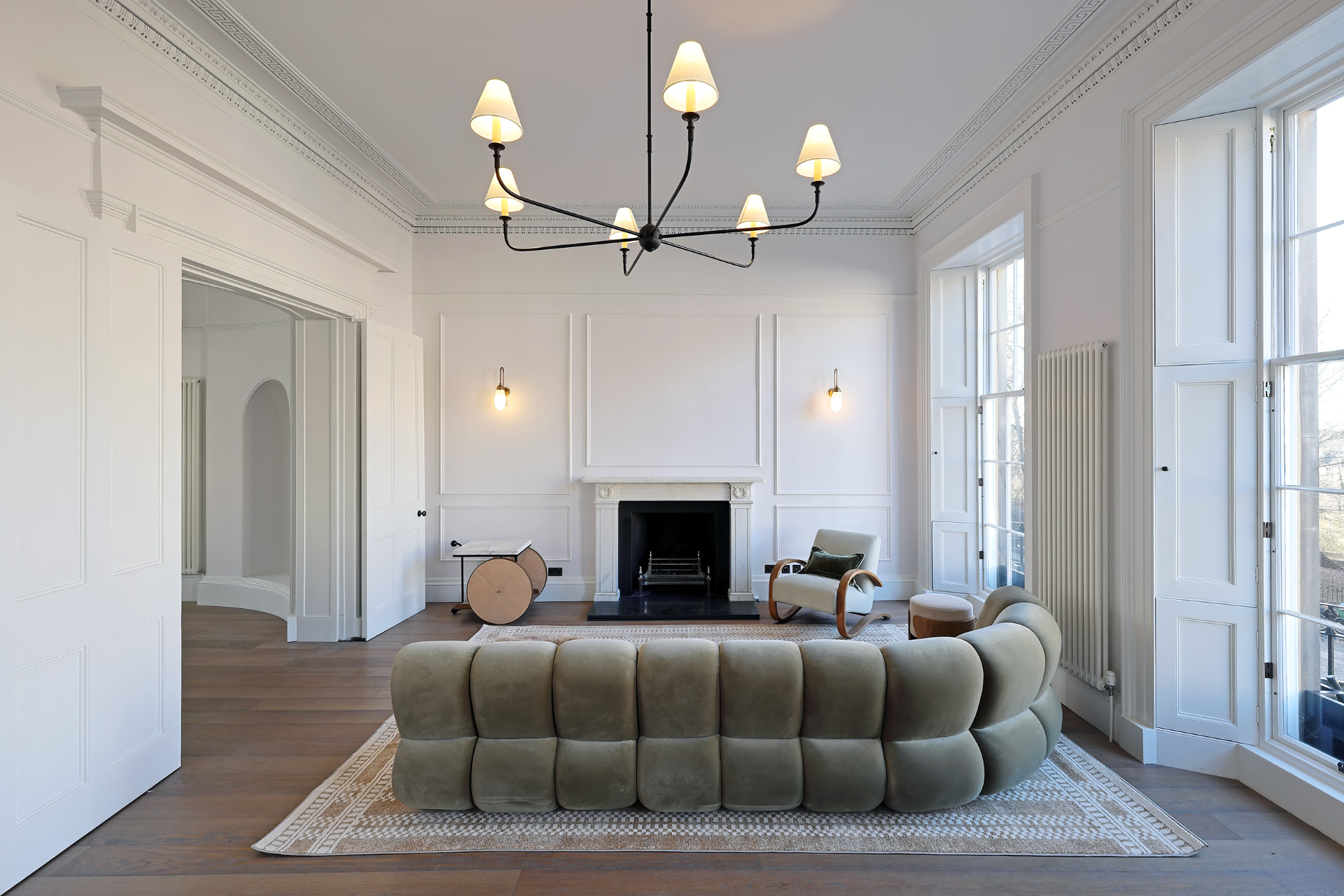
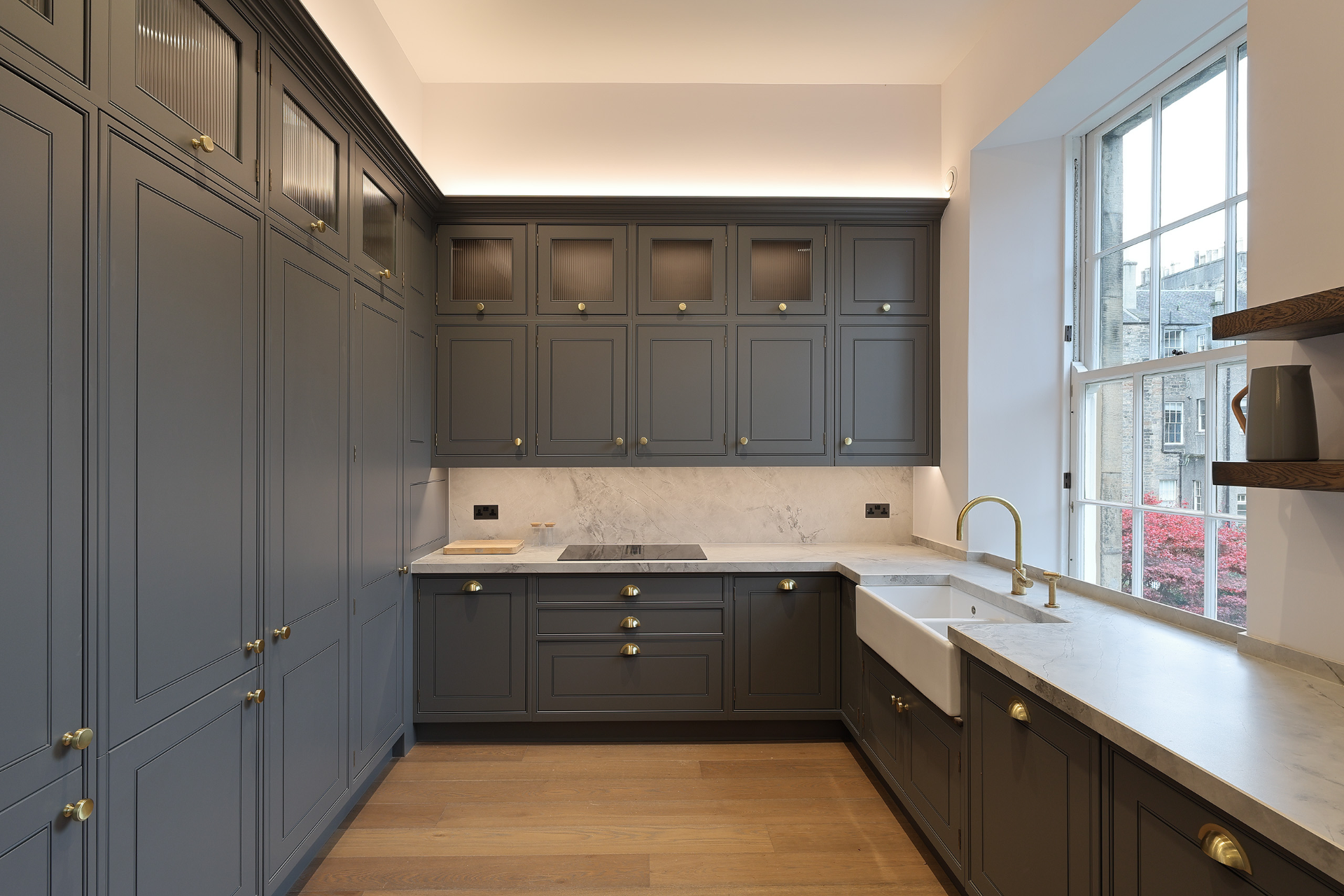
A sensitive remodelling of a Grade A listed Georgian townhouse in Edinburgh’s New Town, carefully reworking historic interiors while introducing contemporary living.
Q. Before we wrap, is there a designer, architect or creative thinker – past or present – who continues to influence your work or philosophy?
A. American architect John Lautner (1911-1994) and Sri Lankan Architect Geoffrey Bawa (1919-2003) are both enduring references for us. Both produced experimental, one-off residences in which the interior seemed to bleed out into the surrounding landscape.
Lautner developed radical, technology driven spatial languages for his houses, while Bawa blended a traditional vernacular with a modernist sensibility. In different ways, both allowed architecture to dissolve its edges.
That idea of interior space bleeding outward, rather than being contained, continues to resonate in our own projects, whether in a tropical courtyard house or a roof level suite overlooking North London gardens.
Hatterwan Architects is a London-based RIBA Chartered practice working across residential and hospitality projects in the UK and internationally.
Explore more of their work here: https://www.hatterwan.com
Are you a design or architecture professional who has previously worked with Riluxa? Share your story and showcase your signature projects in our 'Meet the Designer' series. Tag #Riluxa on Instagram or getting touch here.