How to Clean Marble Surfaces (Without Damaging Them)
Marble is best cleaned with warm water, a soft cloth, and a pH-neutral cleaner or a small amount of mild soap. Avoid acidic products like vinegar or lemon, as these can permanently dull the surface.
The most common mistake is treating marble like ceramic or porcelain. Unlike those materials, marble reacts chemically to everyday products – which is why standard bathroom cleaners often do more harm than good.
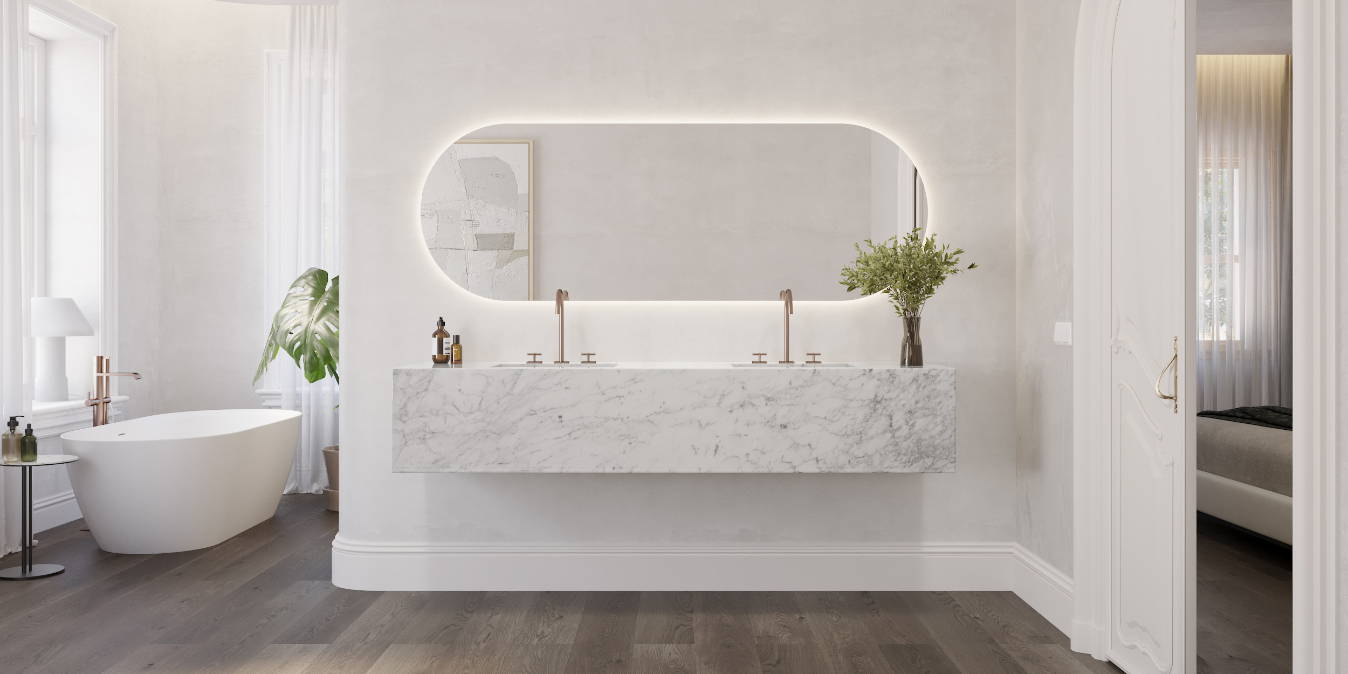
With the right approach, marble is easy to care for. What matters is consistency – and knowing what not to use. This is particularly true for surfaces such as marble basins, where water and product residue are in constant contact.
How to Clean Marble: Step by Step
Cleaning marble doesn’t require specialist routines, but it does require care.
- Remove surface residue - Wipe away dust, toothpaste, soap or water marks using a soft, dry or slightly damp cloth. This prevents buildup before it becomes visible.
- Clean with a gentle solution - Use warm water with a small amount of mild dish soap or a pH-neutral cleaner. Apply with a soft microfibre cloth, working in slow, circular movements. There’s no need to scrub – marble responds better to light, regular cleaning than force.
- Rinse properly - Once cleaned, wipe the surface again with clean water. This removes any remaining residue that could leave a film over time.
- Dry immediately - Dry and buff the surface with a clean, soft cloth. Leaving water to air-dry may seem harmless, but it often leads to marks or dull patches – particularly on polished finishes and in hard water areas.
What Not to Use on Marble
Most damage to marble happens during cleaning. Avoid:
🅇 vinegar
🅇 lemon juice
🅇 bleach or ammonia
🅇 limescale removers
🅇 abrasive cloths, powders or stiff brushes
These are all too aggressive for natural stone. Marble is calcium-based, so it reacts badly with acidic or harsh chemicals. The result is etching – a dull, permanently altered surface that can’t be cleaned away. Once etched, marble often requires professional polishing to restore.
Even small, repeated exposure (from everyday cleaning products, for example) gradually degrades the finish, so it’s not just what you use, but how often.
How Often Should You Clean Marble?
Marble doesn’t need intensive care – just regular attention.
• Daily: Wipe surfaces with a soft, damp cloth after use. Blot spills immediately – especially wine, citrus or coffee
• Weekly: Clean with a pH-neutral stone cleaner or warm water with a drop of mild dish soap (rinse thoroughly)
• Every 6–12 months (depending on use): Reseal the marble to protect against staining.
In practice, frequent light cleaning is far more effective than occasional deep cleaning.
Removing Stains and Marks
Even with good care, marble will occasionally need more attention.
Water spots and hard water residue
These are usually surface-level mineral deposits. Wipe fresh marks with a soft, damp cloth and dry immediately. For stubborn spots, use a cleaner specifically formulated for natural stone (never standard limescale products), these are acidic.
Oil-based stains
Products such as soaps or cosmetics can leave marks. For fresh marks, blot gently with a soft cloth and pH-neutral cleaner. A specialist stone cleaner or poultice may be required to draw out set-in stains.
Dull patches (etching)
If the surface looks matte or uneven, it has likely been affected by an acidic product.
This isn’t a stain – it’s a change in the finish. In most cases, it requires professional polishing to restore.
How to Protect Marble Long-Term
Marble rewards consistency. It doesn’t need complicated care, but it does respond badly to neglect.
The simplest habit is also the most effective: keep it dry. After each use, wipe away water, soap and toothpaste residue. Left to sit, these can dull the surface over time or leave faint marks that are difficult to remove.
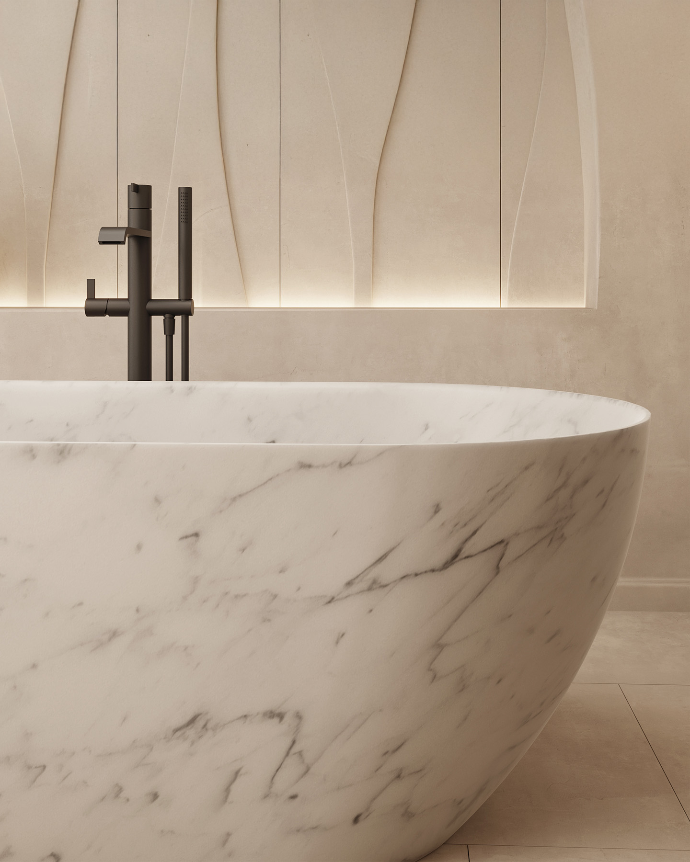
In high-use areas such as bathrooms – particularly around freestanding marble baths and basins – this has a direct impact on how the surface ages.
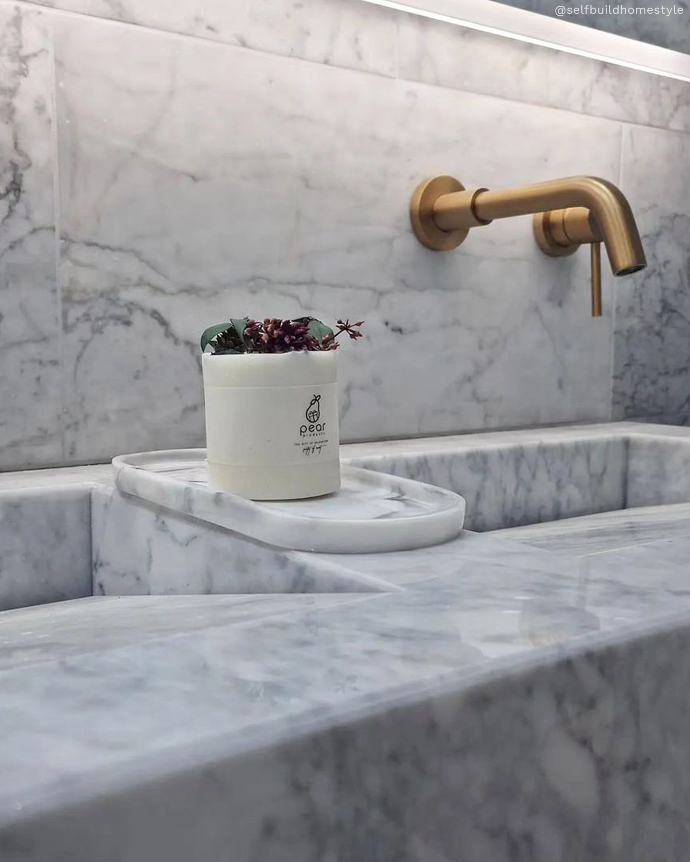
It’s also worth being mindful of what rests on the surface. Bottles, soaps and cosmetics often contain ingredients that can gradually affect the finish. Using a tray not only protects the stone, but keeps the space looking considered.
Most marble surfaces will also benefit from resealing over time. This isn’t needed frequently, but it helps maintain resistance to moisture and staining.
A Final Note
Always test any new cleaning product on a small, inconspicuous area first.
Looking After Marble Properly
This guide covers the essentials of marble cleaning and care.
For a more detailed look at sealing, long-term care and different stone finishes, explore our Marble & Stone Care Guide.
To better understand the nature of marble – from natural variation to how it performs over time – explore our marble materials page.
Frequently Asked Questions about Cleaning Marble
No – and this is one of the most common mistakes. Vinegar is acidic, and even diluted solutions will slowly etch marble, leaving dull patches that cannot be cleaned away.
The safest option is a pH-neutral stone cleaner or a small amount of mild dish soap mixed with warm water. These clean effectively without reacting with the stone. Anything more aggressive risks damaging the finish over time.
Acidic substances such as vinegar, lemon juice, and harsh cleaning products are the most common causes of damage, as they etch the surface.
Surface stains can often be cleaned with a gentle solution, but deeper stains may require a poultice or specialist stone cleaner. The approach depends on the type of stain – oil, water or organic. If in doubt, ask for advice from a professional.
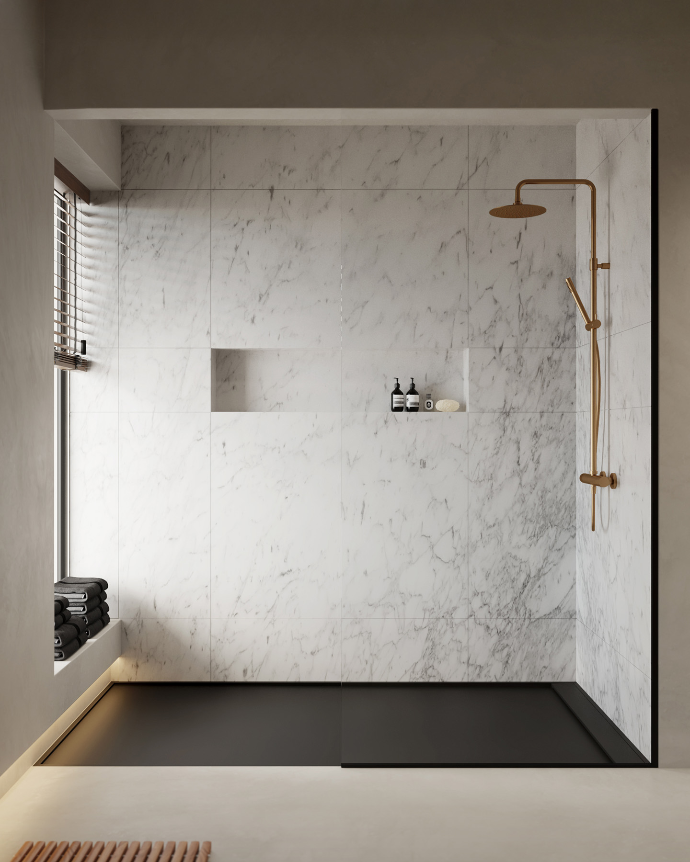
Focus on daily maintenance. After each shower, use a squeegee or soft cloth to remove water and soap residue – to prevent buildup before it becomes visible. Clean once a week with a mild, pH-neutral solution, and run the extractor fan during showering and for at least 10 minutes afterwards.
The principle is the same, but technique matters. Use a damp mop rather than excess water, and avoid letting the floor air-dry. Too much moisture can leave marks or dull the finish, especially on polished marble.
Use a stone-safe cleaner and a soft cloth, focusing on areas where moisture and residue collect. Avoid bleach or harsh sprays, which can damage the surface. Good ventilation and keeping the shower dry will help prevent it returning.
Marble is typically sealed every 6–12 months, depending on use. In high-use areas like basins and showers, more frequent sealing may be needed. If water no longer beads on the surface, it’s time to reseal.