
The Soul of the Place: Olenka Interiors in Puglia
Olenka Airasca has spent her life in creative worlds, from music to design, and it shows in the way she works. Based between the Italian Riviera and Monaco, she and her partner Andrea Barelli restore historic homes in Italy and France through their studio, Olenka Interiors, guided by a deep feeling for place and the stories embedded within it. Their collection of holiday homes in Puglia, La Musa Diffusa, is where that approach is most vividly on show.
We spoke with Olenka about the houses she has brought back to life, and about the bathtub at the heart of her newest house.
A Creative Life: Music, Monte Carlo and Design
Music and Monaco came first. A singer as well as a designer, Olenka has also worked as Art Director of Monte Carlo’s legendary Sass Café. In 2018, she founded Olenka Interiors with Andrea. Creativity, she says, has been the thread throughout.
Andrea brings his thirty years of hospitality experience to the partnership, and together they settled on a guiding principle when it comes to restoration: "Our aim is to preserve their authenticity while enriching them with contemporary elements and a Mediterranean approach. The result is welcoming, timeless spaces that balance past and present."
The studio’s style is eclectic, shaped by each building rather than tied to a fixed aesthetic. For private commissions, the process begins the same way it does with her own houses: by listening. “We begin by listening,” she says, “understanding the client’s wishes and weaving them with the spirit of the place.” Only then does the studio layer in its own language.

La Musa Diffusa: A Slower Kind of Hospitality
La Musa Diffusa grew out of Puglia itself. The region's authentic beauty drew Olenka and Andrea in, and what began as a personal passion became a collection of restored holiday homes where "historic architecture meets contemporary Mediterranean design."
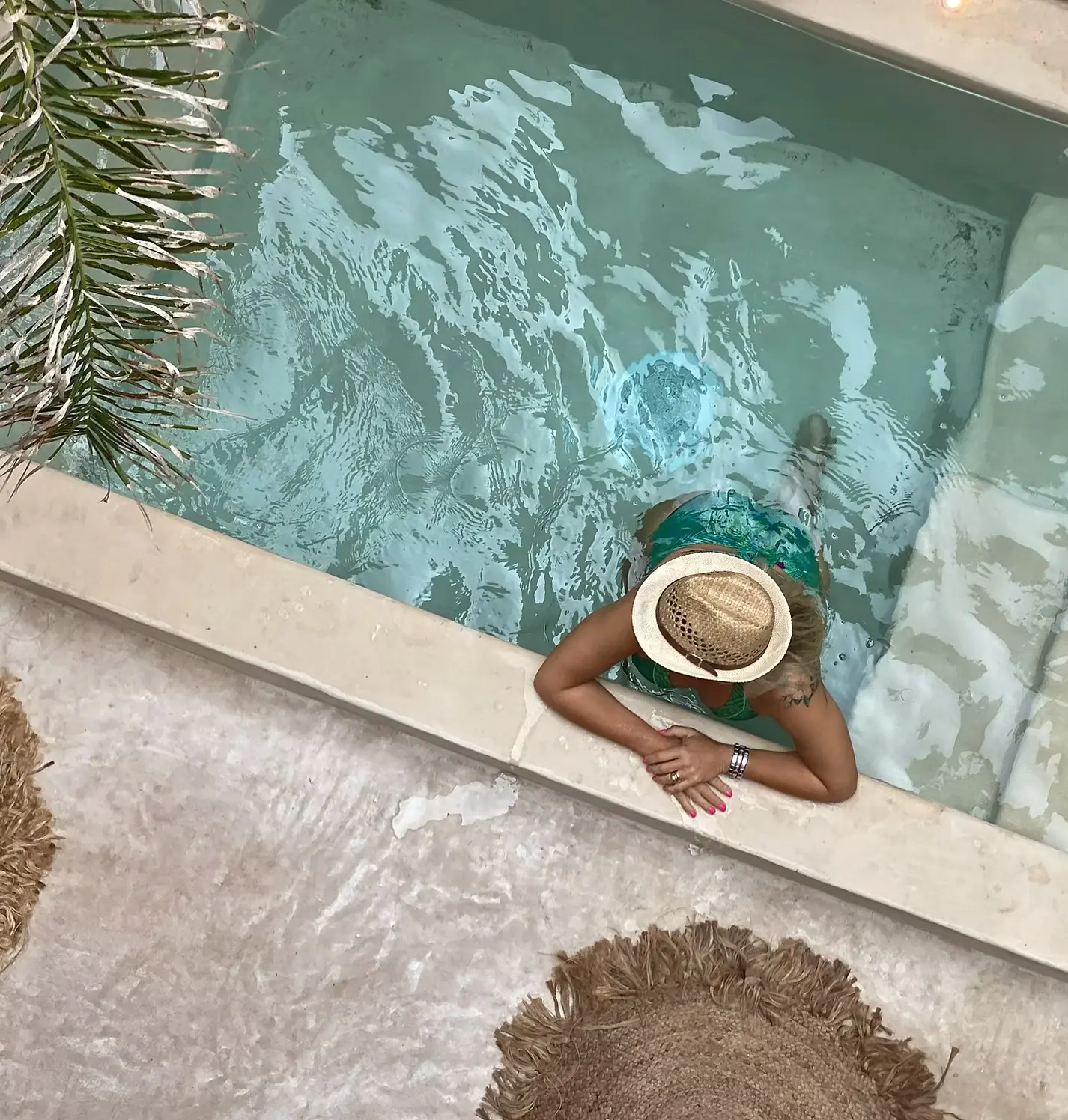
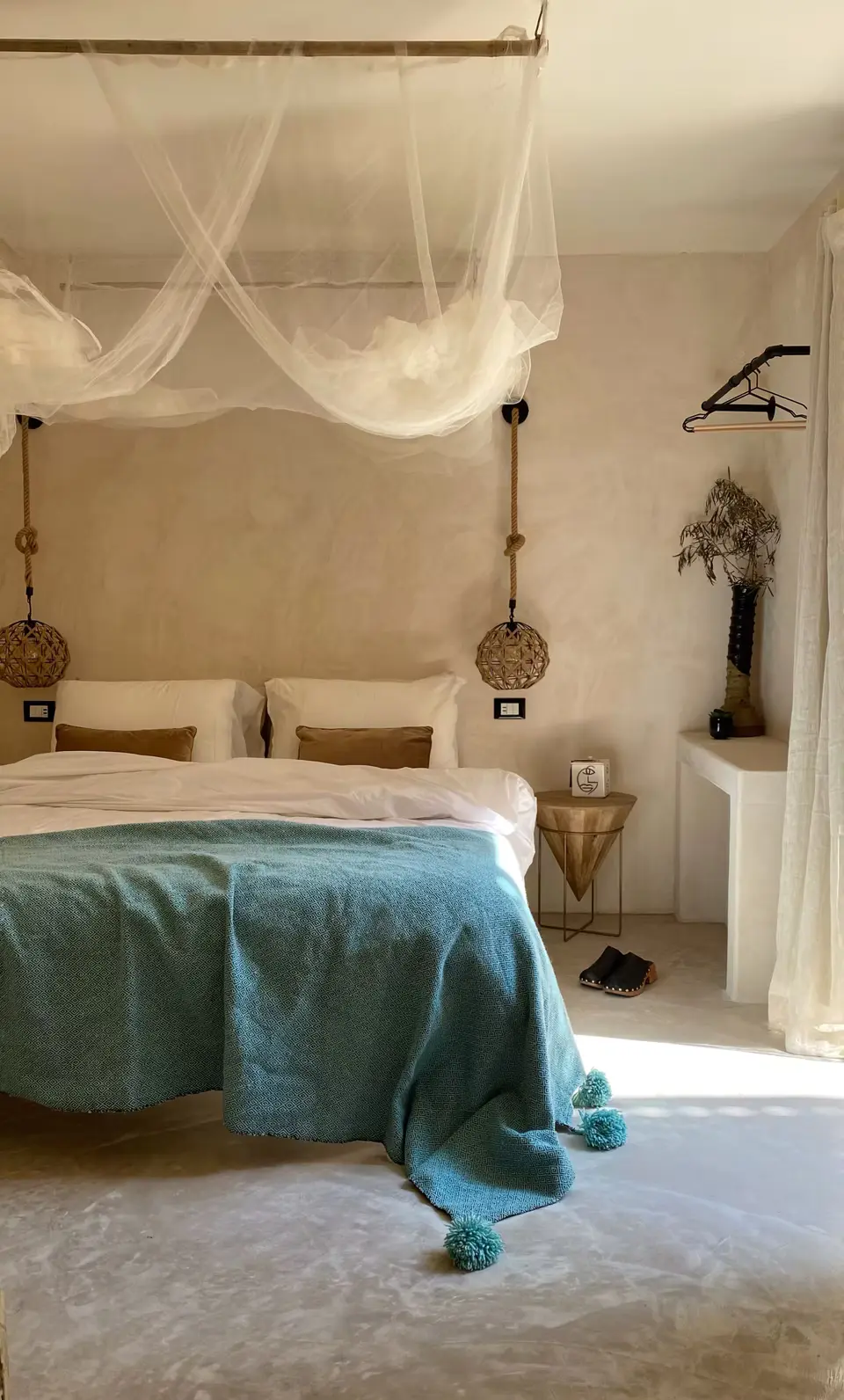
Musa Aqua is tucked into Carovigno’s historic centre, where star-vaulted ceilings, old stone and patterned cementine-tiled floors give the house its character. Darker tones bring a cool, cocooning feel, while the rooms open onto an intimate terrace and plunge pool.
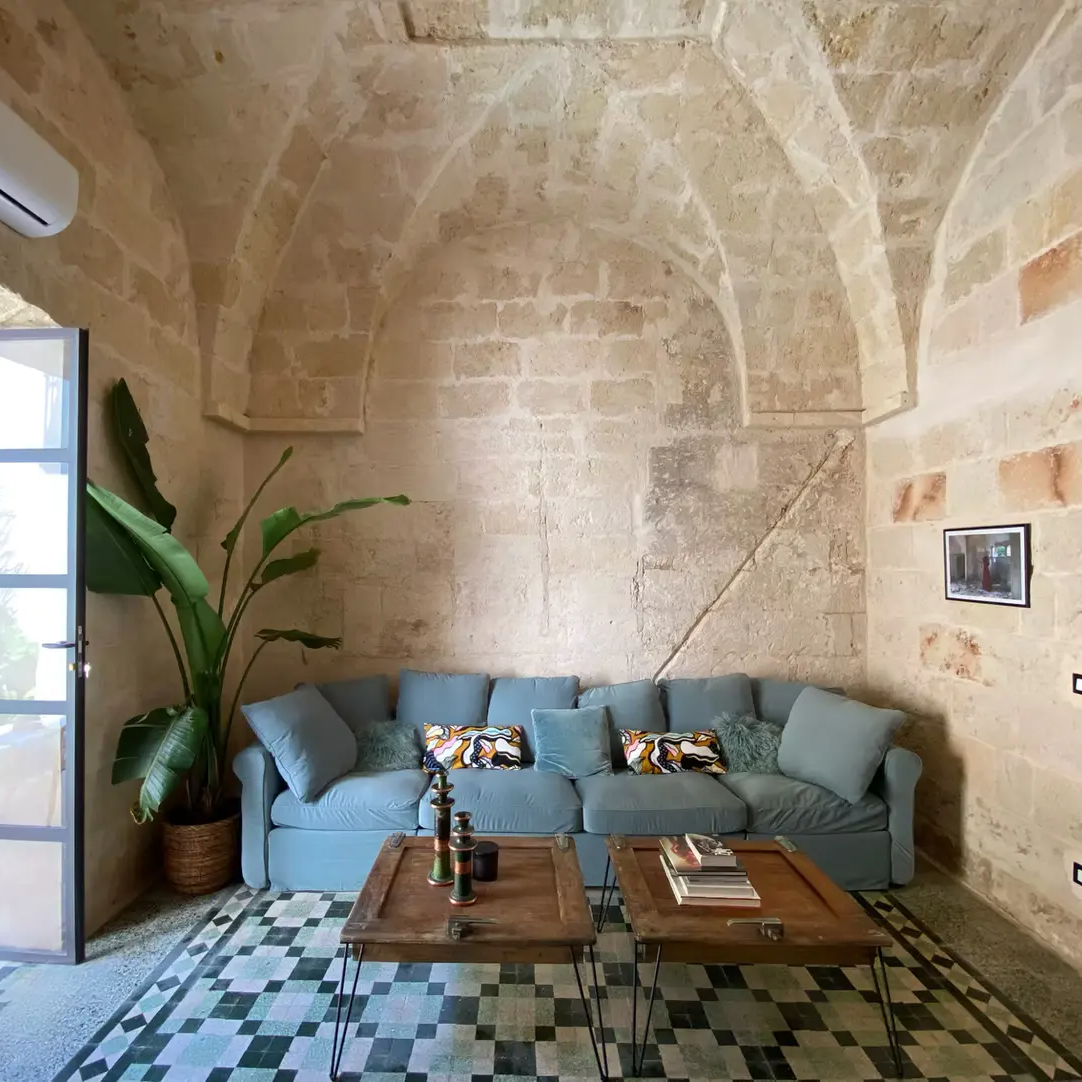
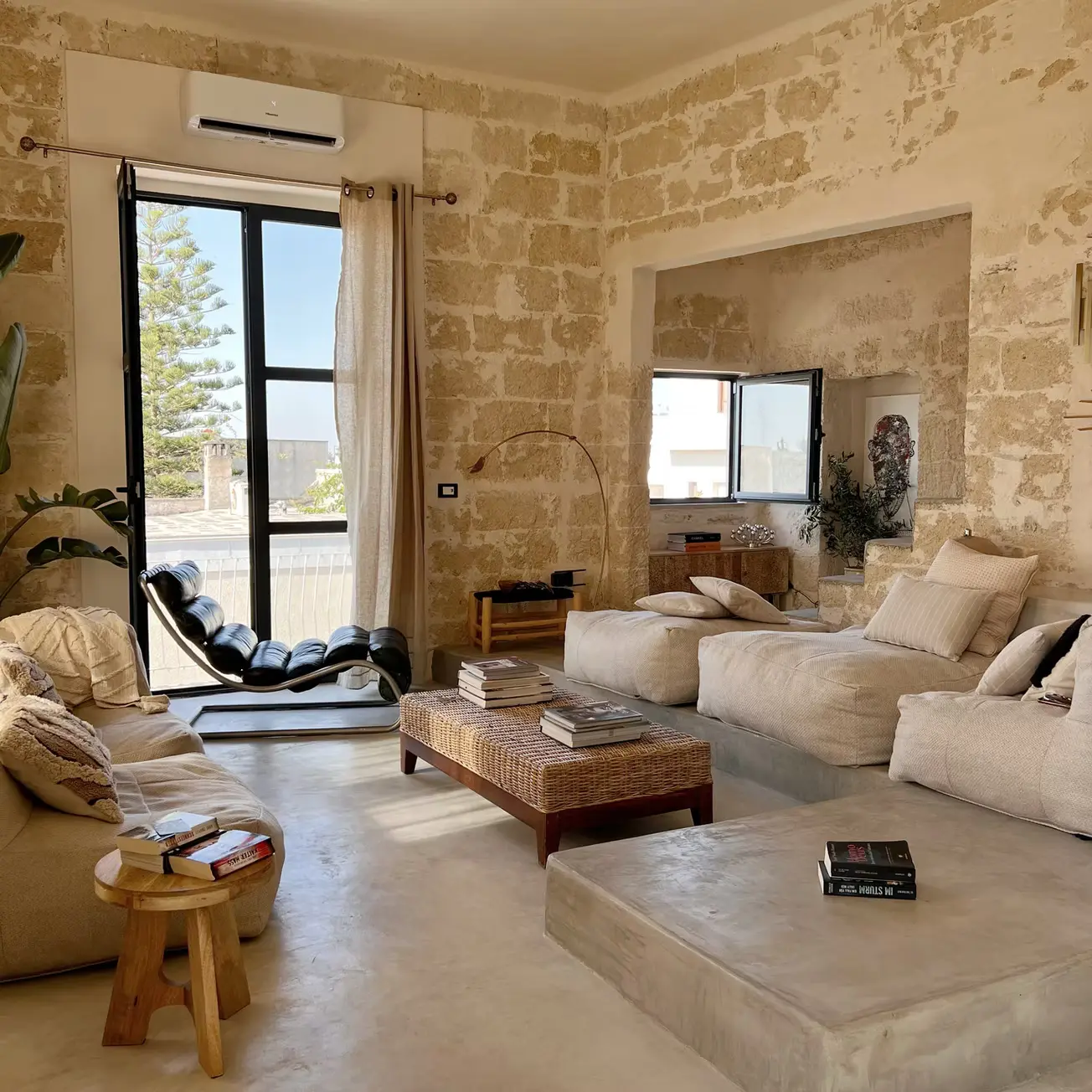
Musa Diva, by contrast, is more expressive and indulgent: a penthouse retreat where bold colour and sophisticated detail give way to a generous terrace with a plunge pool. Despite being close to the historic centre, it has the feeling of a private escape.
Then there is her latest project, Musa Calma, a quieter, more intimate retreat where ancient arches and thick stone walls frame a private garden. A century-old mandarin tree shades the pool, while pops of colour and contemporary sculptural pieces add warmth and surprise.
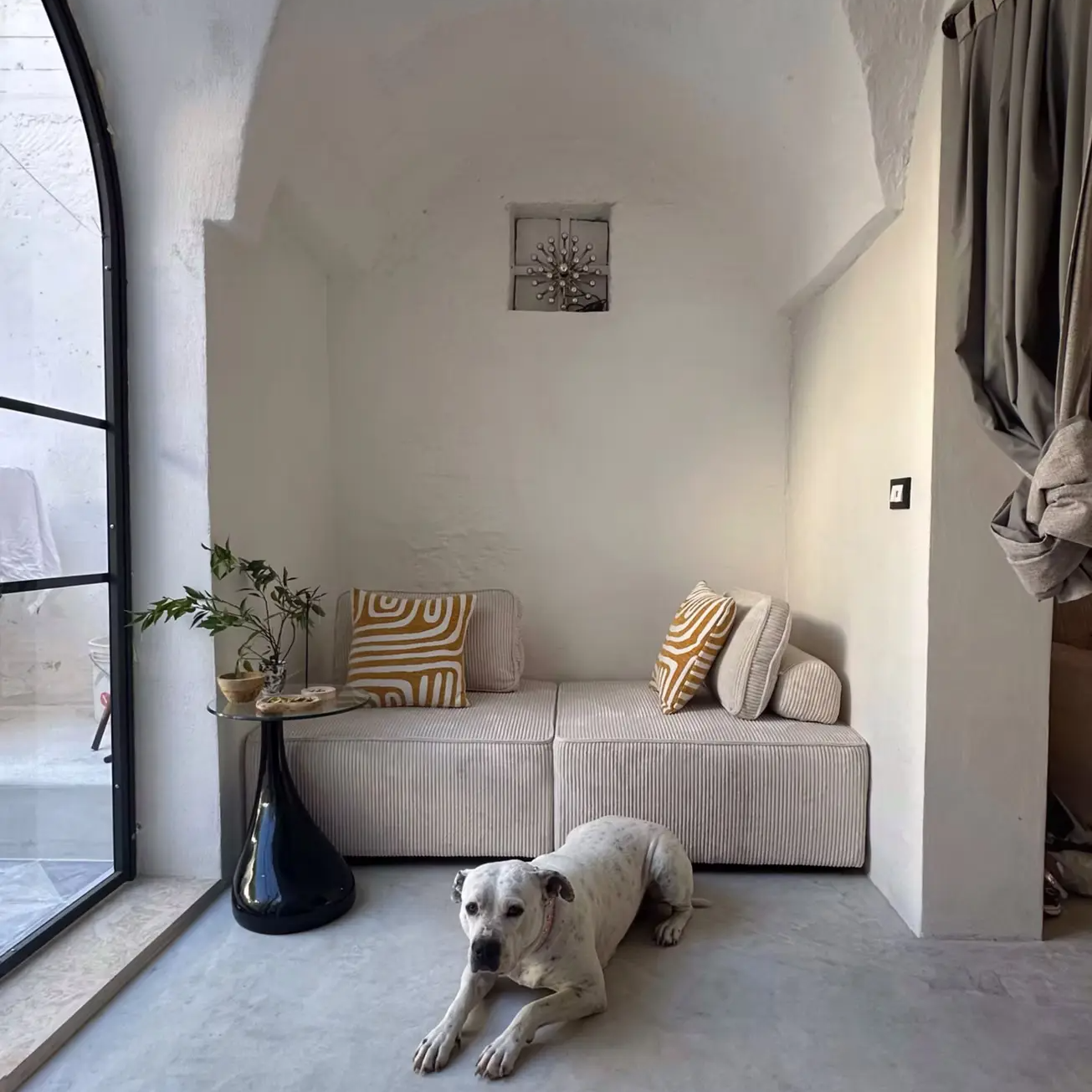
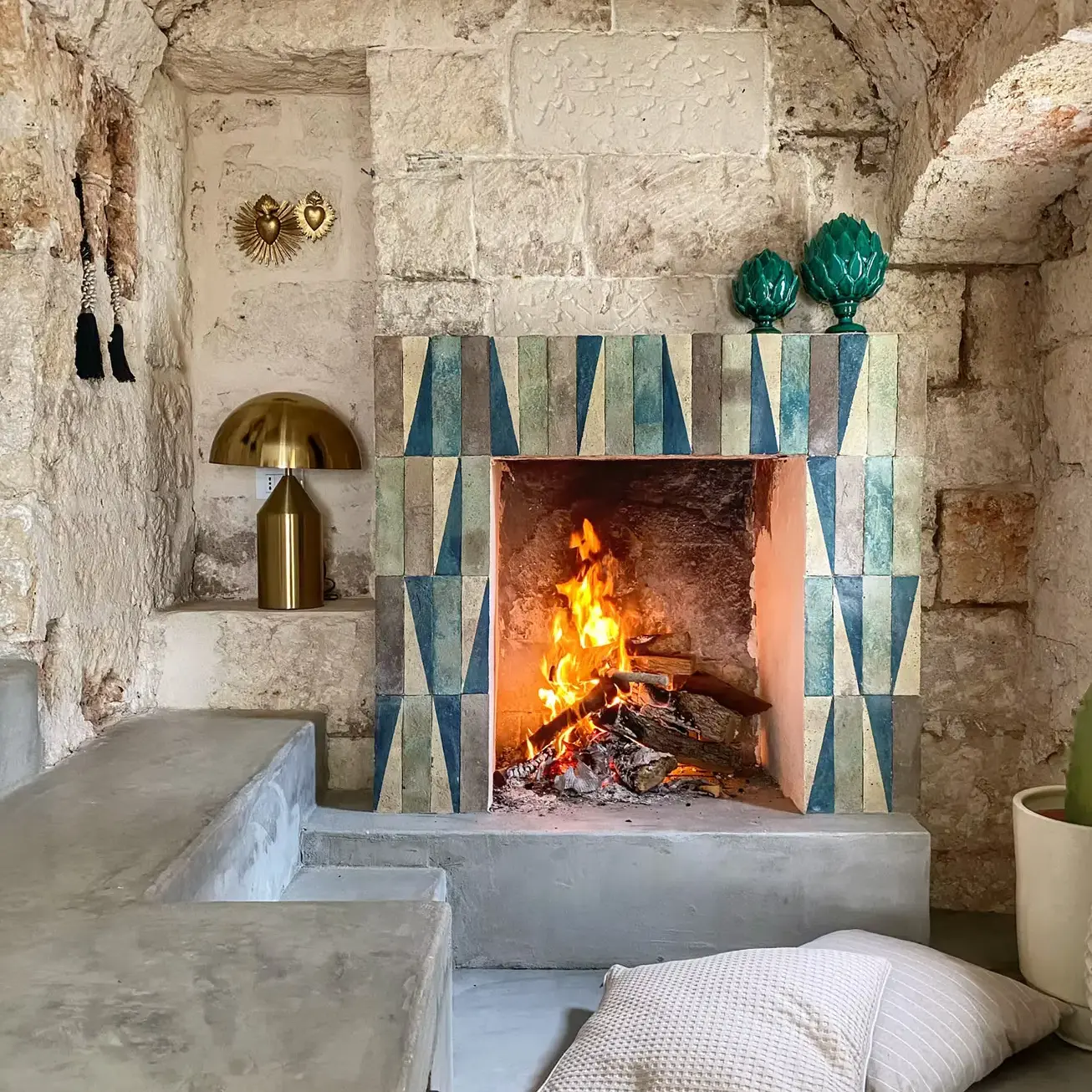
Beyond the La Musa Diffusa houses in Carovigno stands La Cabane. Set in the Ostuni countryside, this lamia has a more layered, bohemian character, with antique doors from Rajasthan and even a sliding door salvaged from a chicken coop in Sanremo. Surrounded by olive trees, it feels wonderfully removed from the outside world.
Running beneath all of it is tufo, the stone this part of Puglia is built from. Olenka leaves it in its natural state, rough edges and ancient joints intact. "We embrace these flaws," she says, "letting the stone's true beauty and the essence of Puglia come through." It keeps interiors cool in summer and warm in winter.
Every home here has its own story, and each has been restored on its own terms. What runs through them all is Olenka's eye for detail and her instinct to work with what is already there. “We wanted to offer a slower kind of hospitality,” she shares, “rooted in local culture, respectful of heritage, yet infused with our creative vision.”
The Bathroom as a Sanctuary
The way we think about bathrooms has changed dramatically in recent years, and Olenka believes this shift is only beginning. “Bathrooms have become central. They are now sanctuaries for self-care as much as practical spaces,” she observes. “We envision them as personal refuges with natural materials, light play and serene elegance.”
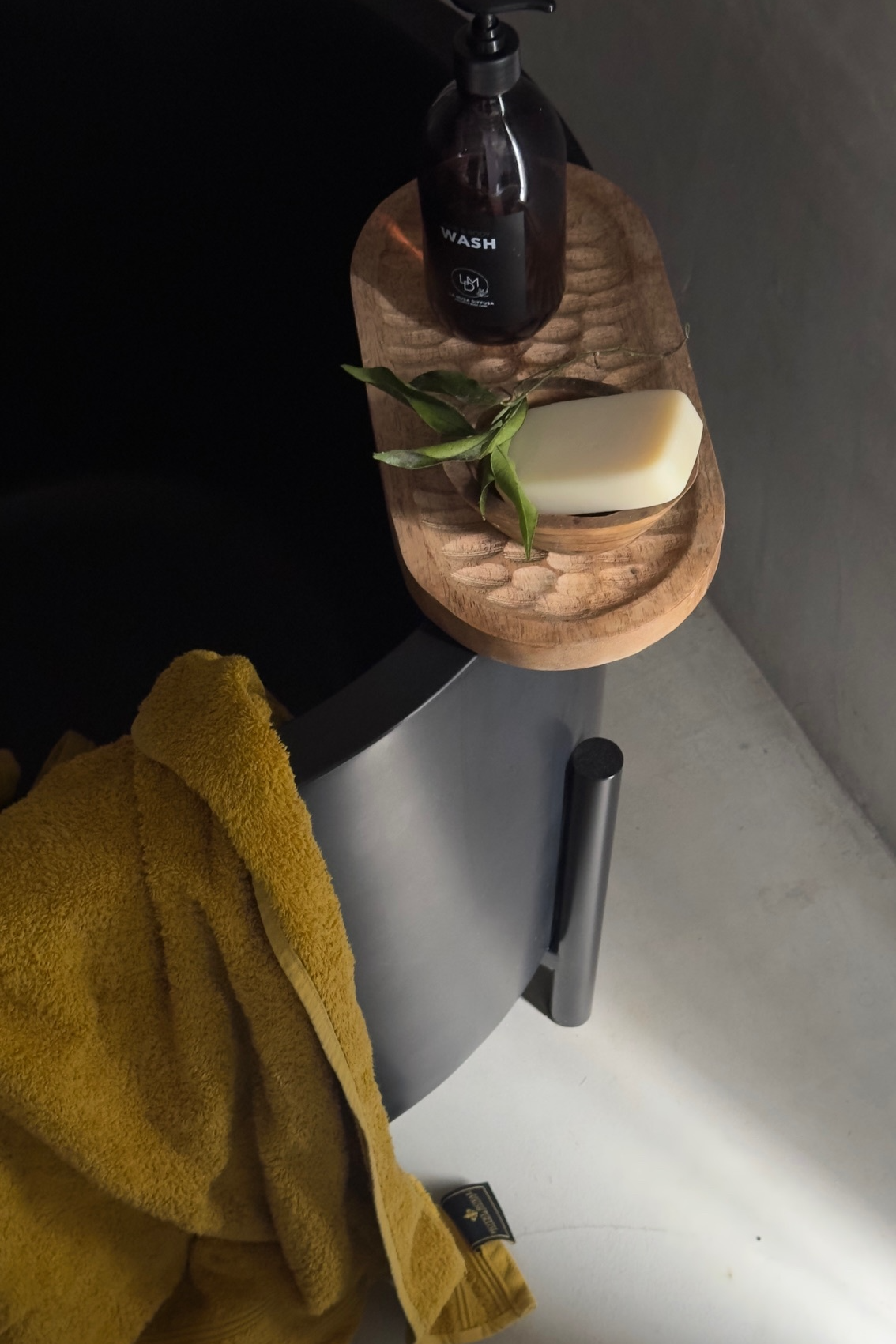
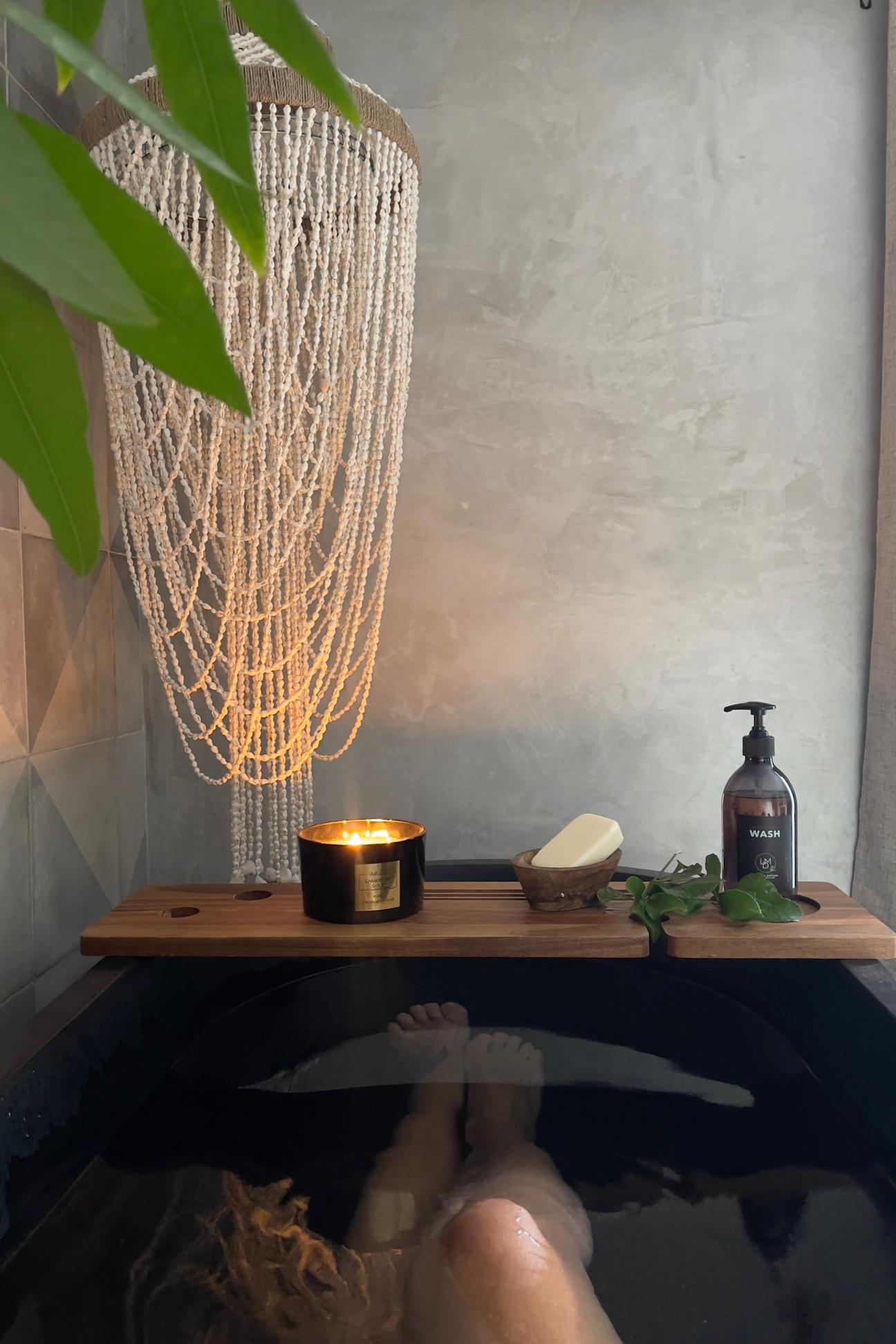
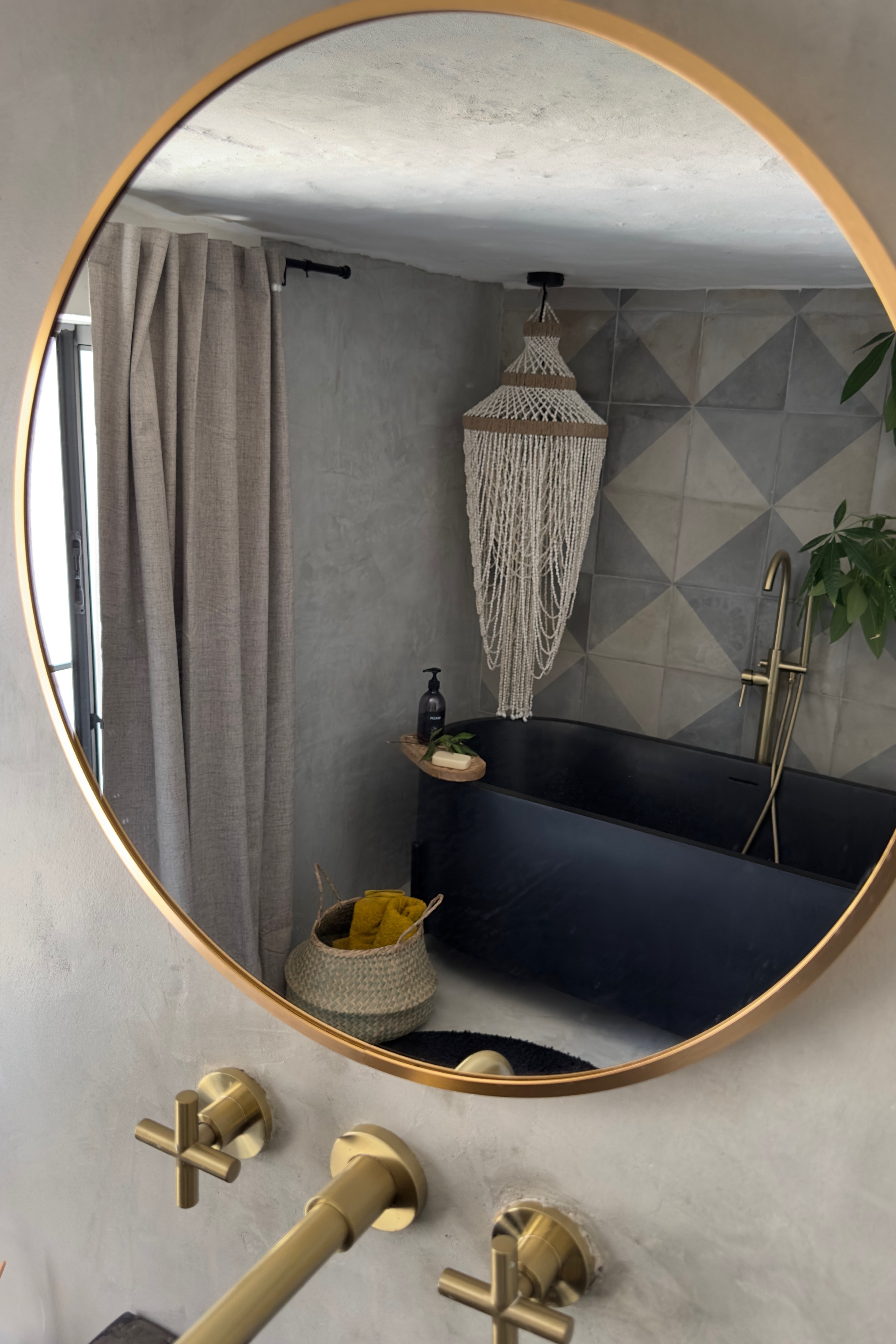
Musa Calma is a case in point. She and Andrea wanted a bathtub that could become the visual focal point of the room. It would sit in front of a wall of antique checkerboard cementine tiles, a backdrop graphic enough to overwhelm anything ordinary. The bathtub had to earn that position.
Olenka found it, as she finds so many things, through a search for products combining “quality, design and personality.” The sculptural Milano bathtub stood out: a true protagonist in the room. Finished in matte black Mineral Stone, Riluxa's own stone resin, its smooth, monolithic surface answers the aged tiles behind it. The bathtub anchors the room while the original tiles hold their own.

Musa Calma, with the Milano bathtub by Riluxa at the heart of the bathroom.
“The Riluxa bathtub integrated perfectly, transforming the bathroom into a private oasis.”
That same thinking shapes the advice she offers to anyone embarking on a bathroom project of their own. “Don’t treat it as secondary,” she says. “Balance beauty with practicality. Simple lines, quality materials and thoughtful lighting make all the difference.”
What Comes Next
Reflecting on her career, Olenka identifies the discovery of Puglia as a pivotal moment. “A land rich in culture and architecture, from Baroque to trulli,” she says, “offered fertile ground for inspiration.”
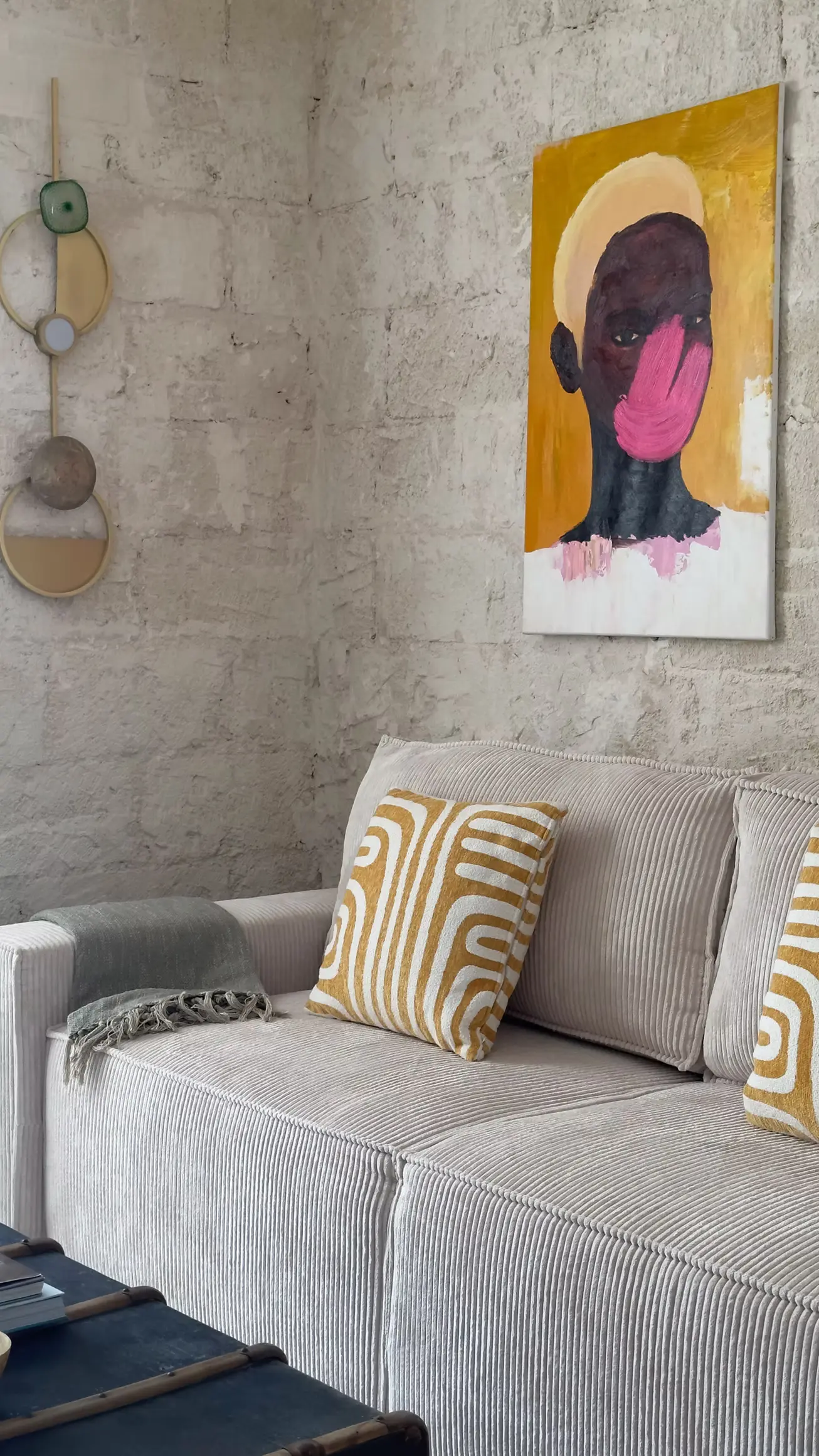
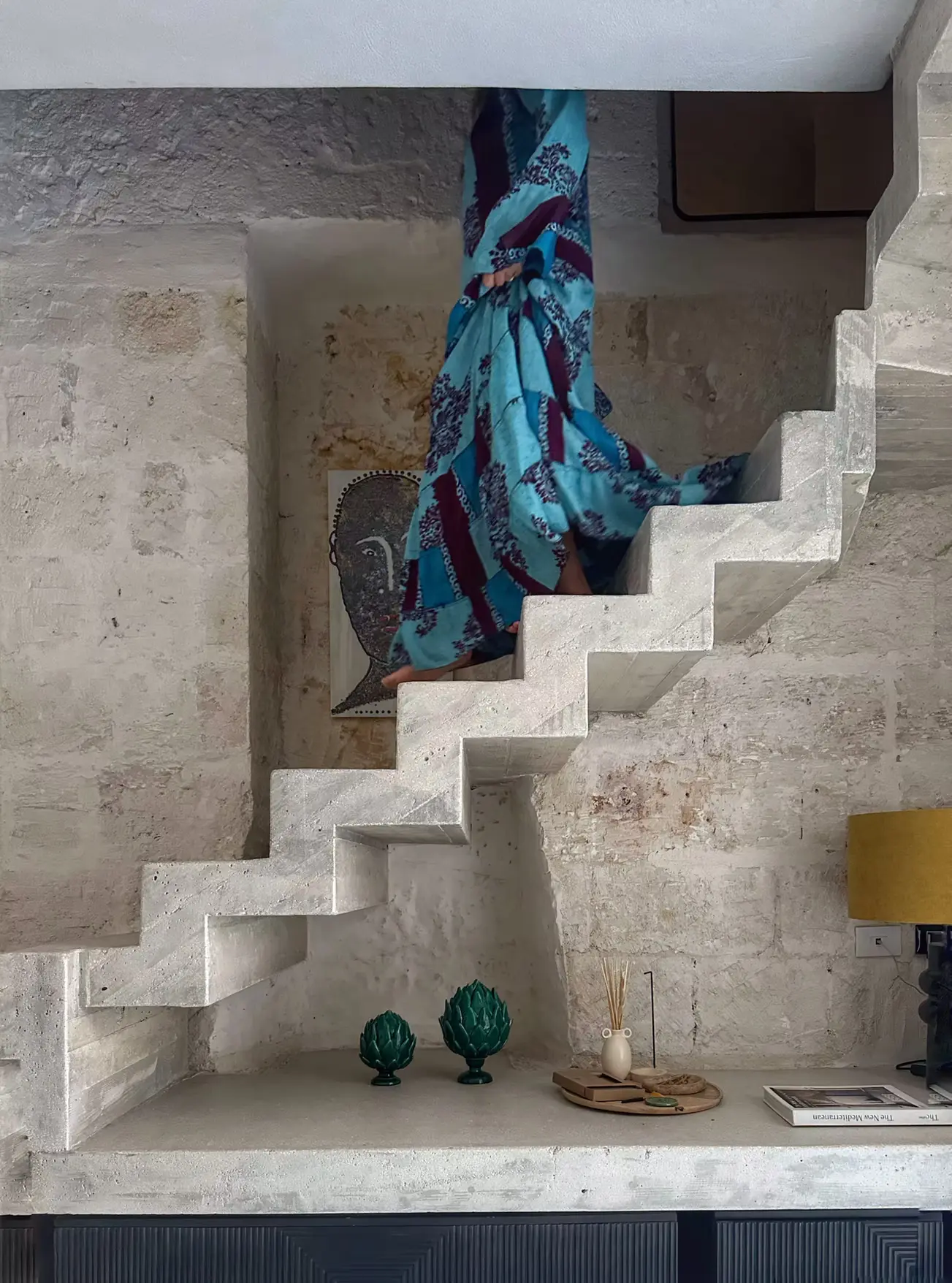
She and Andrea are now working across residential and hospitality projects that combine Mediterranean identity, wellness and sustainability. Their work continues to draw inspiration from two lasting design influences: Ettore Sottsass, the architect behind the Memphis Group's colourful, playful forms, and Gaetano Pesce, whose radical experiments with materials showed them the value of uniqueness. "Both inspired us to find our own voice, contemporary yet authentic," she says.
Whatever form the next projects take, they will be unmistakably Olenka's.
Discover more of Olenka’s work at olenkainteriors.it and follow @olenkainteriors and @lamusadiffusa on Instagram for a glimpse into her Puglian retreats.