What Type of Mirror is Best for Bathrooms?
The best bathroom mirror is a moisture-resistant model that is correctly sized for your vanity, features functional lighting (like adjustable LED) and complements your design style. While steam and sturdiness are critical factors, the ideal mirror also balances practical features with aesthetics to turn your bathroom into a functional and tranquil retreat. In this guide, we’ll break down how to choose based on size, style, lighting and features like anti-fog technology, drawing on our expertise at Riluxa.
Contents
Types of Bathroom Mirrors
Your bathroom's layout, lighting, and storage needs will largely determine the most suitable type of mirror. The right choice seamlessly blends practical purpose with aesthetic appeal, turning a essential feature into a core element of your design.
Wall-mounted Mirrors
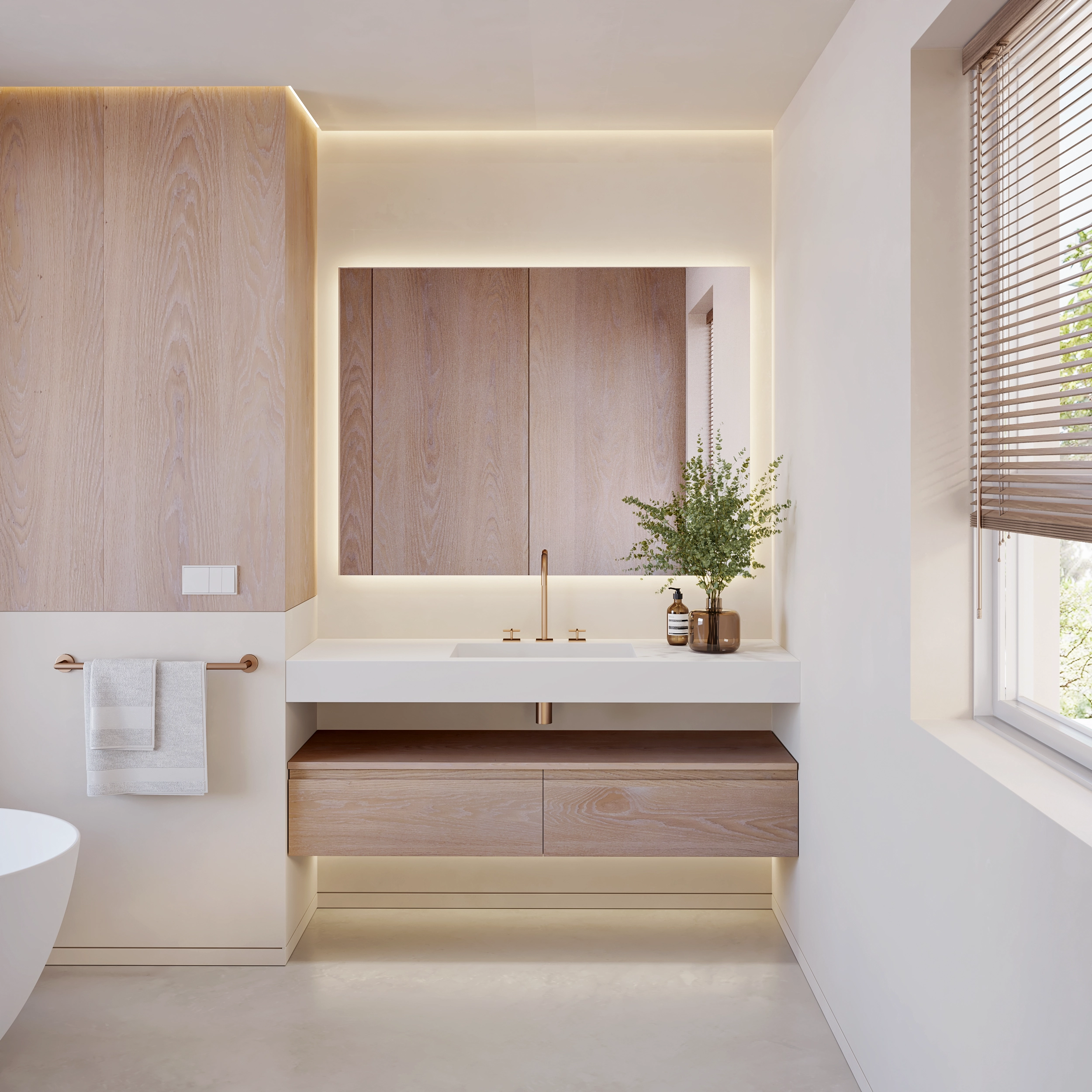
The timeless choice. Wall-mounted mirrors adapt to nearly every layout, from compact cloakrooms to expansive master suites. A single large mirror can open up a room, while smaller mirrors offer a sense of intimacy. Simple yet versatile, they’re the foundation of most bathroom designs.
 Example of a rectangular wall-mounted mirror in a Riluxa client’s bathroom
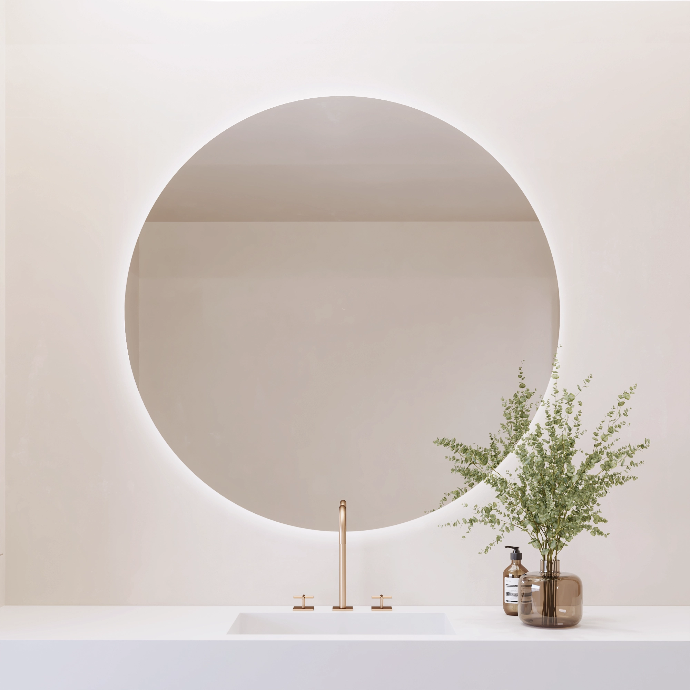
 Backlit mirror adding a soft glow in a Riluxa client’s bathroom. Courtesy of @kotikuorenalla
Bathroom Mirrors with Lights
Illuminated mirrors, whether frontlit or backlit, serve both function and mood. They’re not designed to replace overhead lighting, but the soft glow can make early mornings or late nights more inviting.
When choosing one, ensure it is IP44-rated or higher for safe use in humid environments. Many also feature adjustable lighting, a detail we'll explore further in our section on functional features.
Decorative Mirrors
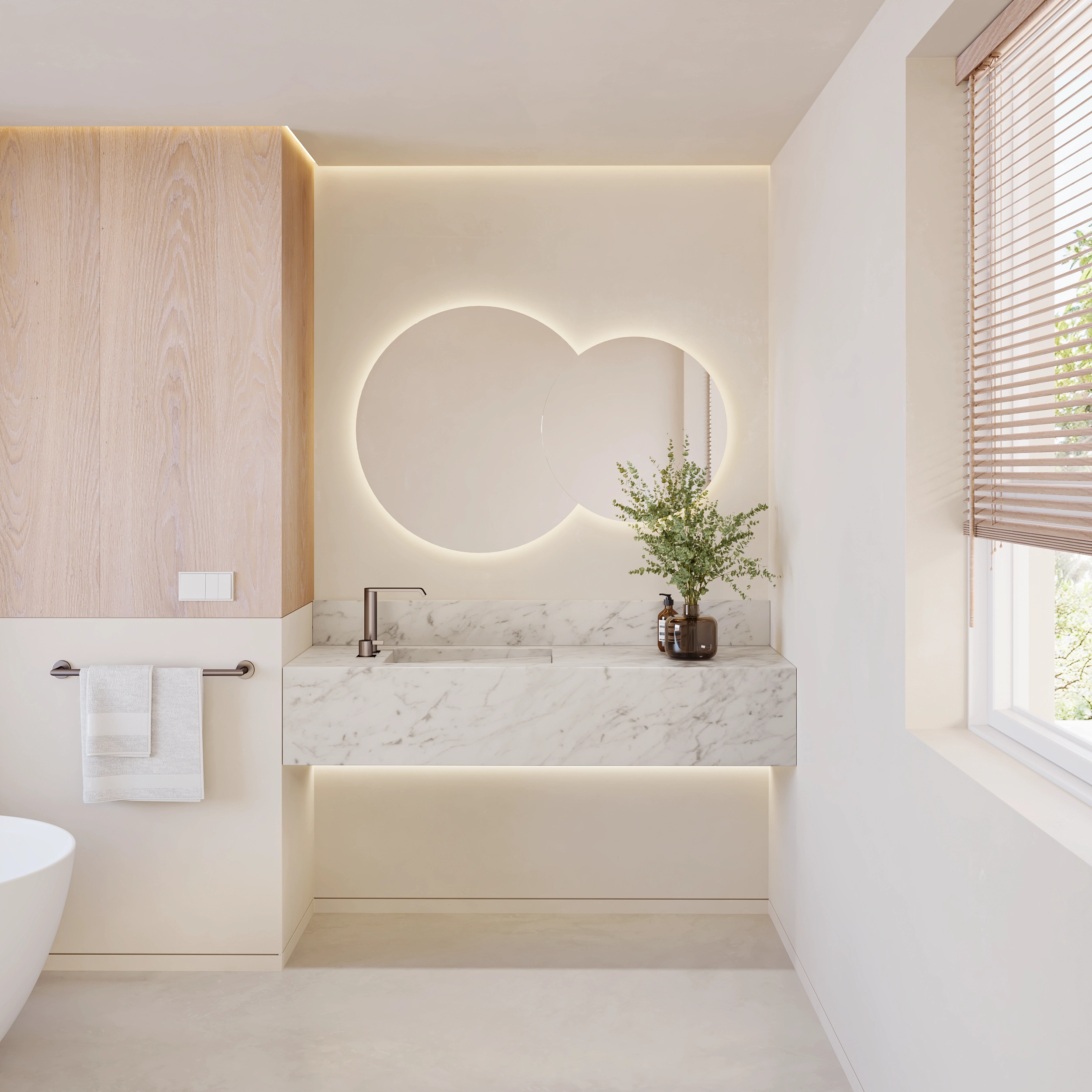
In bathrooms, where walls are often bare, the mirror itself becomes a design feature. Framed mirrors can introduce material accents and detail. Sculptural shapes, bold curves, or unexpected proportions all shift the mirror from functional to statement piece.
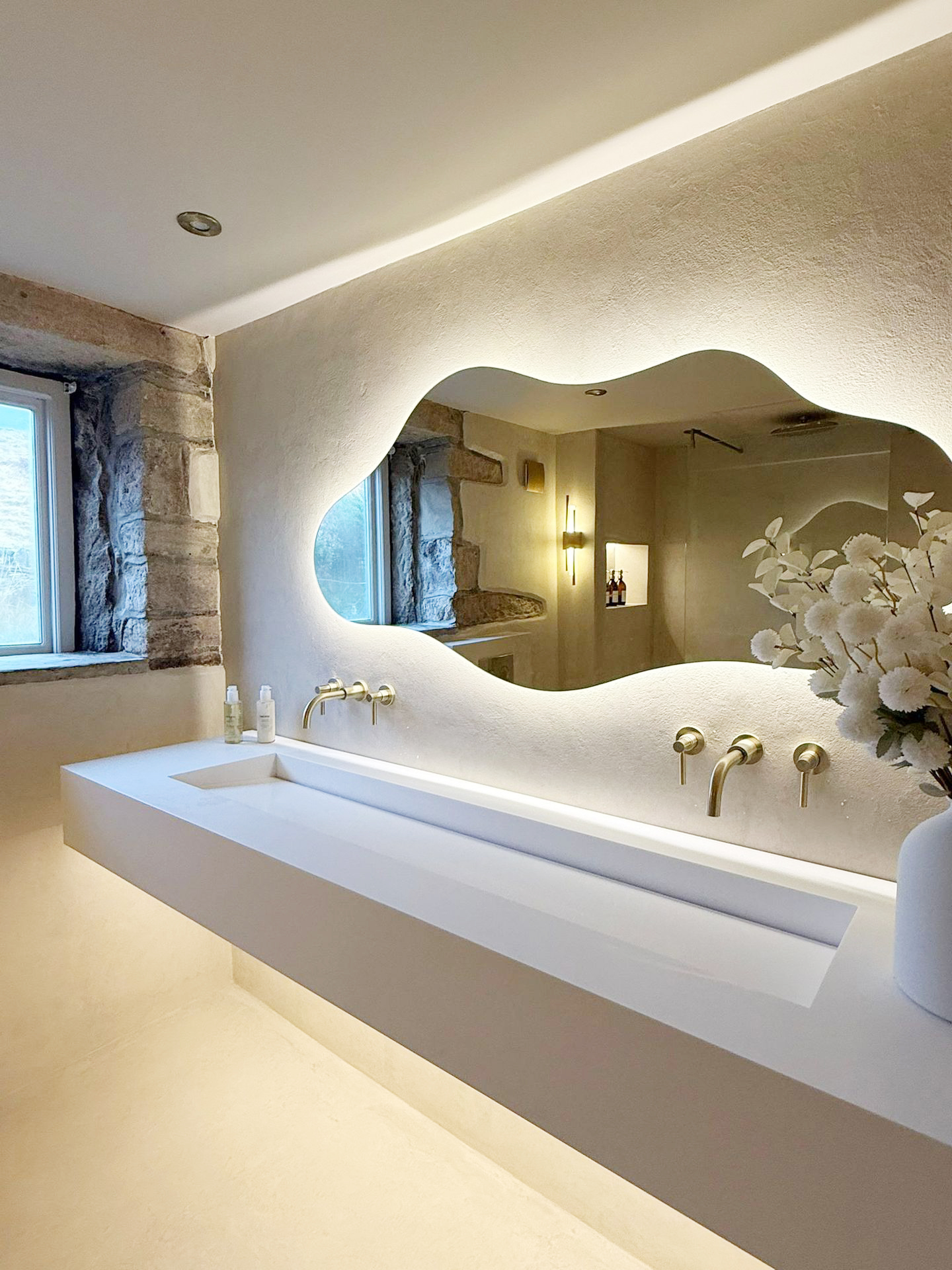 Example of a decorative mirror in a Riluxa client’s bathroom
 A bespoke Halo Mirror featured in a project by interior designer Nadine Klaus (Instagram @nadine.klaus.decoration). Photograph by Bertrand Maquenhem (Instagram @bertrand_pictures).
Made to Measure & Custom Mirrors
For a truly seamless look or to accommodate unique spaces, made to measure mirrors are the ultimate solution. Custom made mirrors allow you to specify the exact size, shape and often the features, ensuring a perfect fit for your project and turning the mirror into a true architectural element.
Bathroom Mirrors with Storage
When space is tight, mirrors can multitask. Mirrored cabinets, also known as medicine cabinets, tuck away toiletries while keeping surfaces clutter-free. Look for soft-close mechanisms and shallow depths to avoid dominating the room.
For the most streamlined look, consider integrating storage into the wall itself during a renovation. This creates a custom, built-in feel that is both practical and elegant. As demonstrated in this project by bathroom planner Franziska Kanani, twin inset cabinets with mirror fronts can provide generous storage while maintaining a clean, uncluttered aesthetic.
 Insert mirror-front cabinets with hinged doors. Architect: Franziska Kanani
Bathroom Mirror Size Guide: Width, Height & Proportion
Getting the proportions right is the difference between a mirror that fits and one that truly belongs. Perfect sizing ensures functionality for all users, creates visual balance with your vanity, and can even trick the eye into perceiving more space. This guide will help you navigate the key measurements.
How Wide Should a Bathroom Mirror Be?
As a general rule, your mirror shouldn’t be wider than the vanity beneath it. For most spaces, a mirror around 70–80% of the vanity’s width feels balanced and elegant - especially when you want to leave space for wall lights (sconces) on each side, or to give the composition a little breathing room.
Prefer a crisp, contemporary look? A full-width (100%) mirror can be stunning - particularly frameless or backlit - as long as the lighting and proportions are handled carefully.
For vanities that aren't a standard size, or for a truly integrated look, consider custom made mirrors to get the perfect proportion.


A practical look at how mirror width transforms a space.
Height & Hanging Position
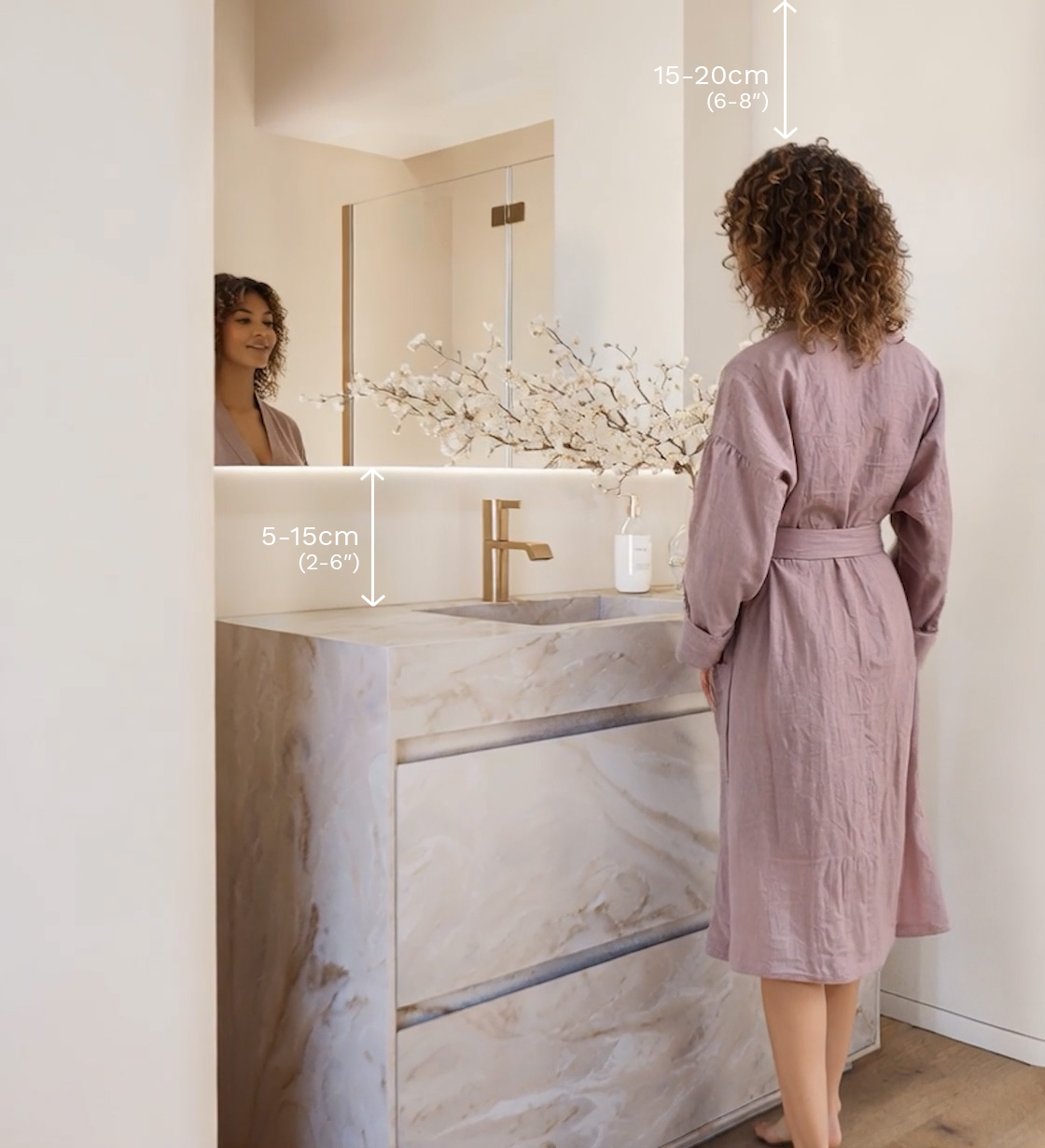
Height is less about fixed rules and more about the people using it. Your mirror should comfortably reflect everyone from tallest to shortest in the household. Position the bottom edge of the mirror roughly 5-15cm (2-6 inches) above the basin to protect it from splashes. Then, ensure the top edge sits at least 15-20cm (6-8 inches) above the tallest user's head. This guarantees a clear, full reflection for all, without anyone having to duck or stand on their toes.
Scale & Space Tricks
Small bathroom? Don’t assume the mirror needs to be small too. In fact, going larger can be one of the smartest design choices. A wall-to-wall mirror doubles the perception of space, bouncing light around and making the room feel airy and open.
For narrow cloakrooms, a tall mirror draws the eye upward, adding vertical drama. In wide bathrooms, spanning a mirror across the length of the vanity creates a sense of luxury and scale that smaller mirrors can’t match.

Pro tip: “A large wall-to-wall mirror can make a small bathroom feel twice the size”.
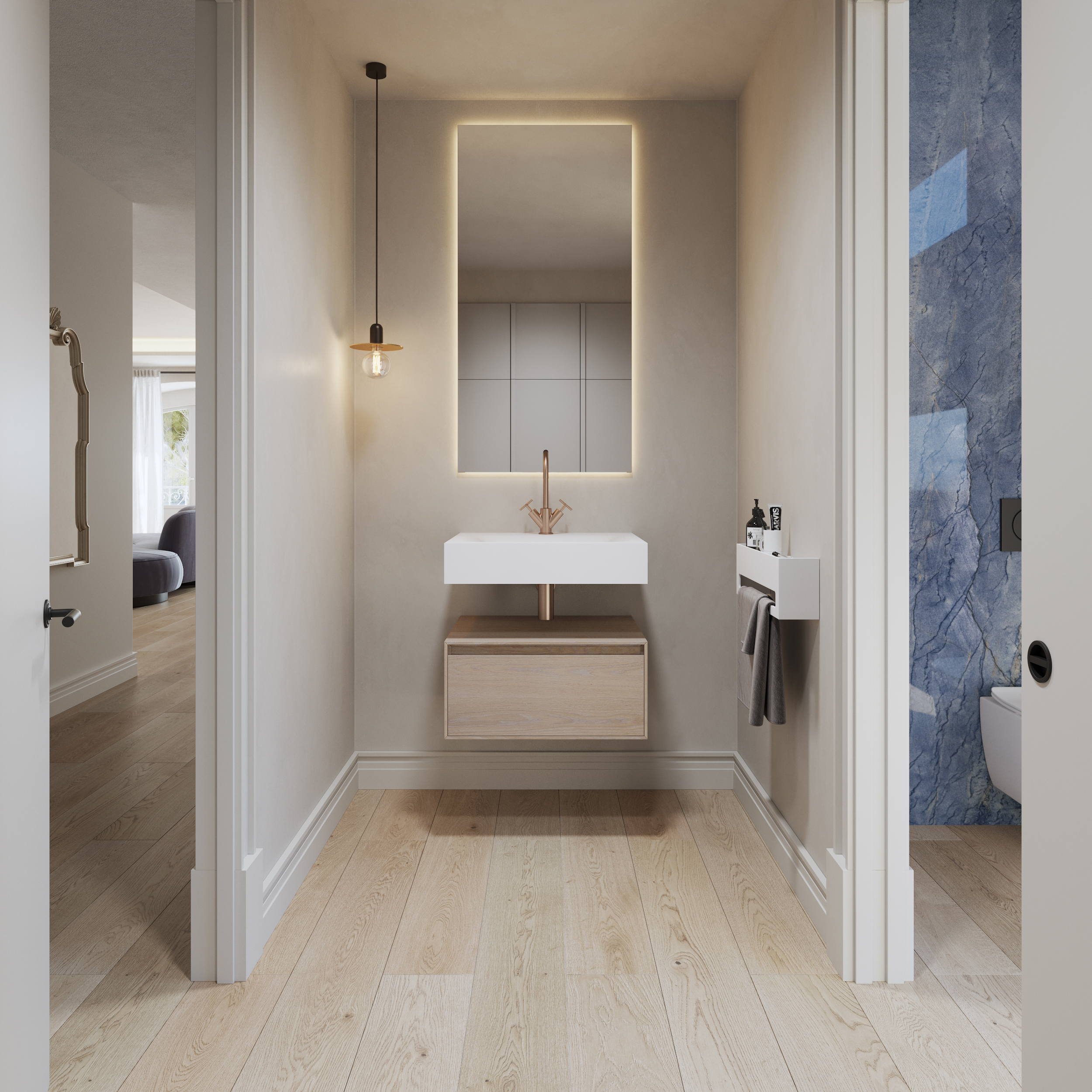
Use a tall mirror to draw the eye upward.

Full-width mirrors create an epic sense of scale.
Single or Double Mirrors with a Double Vanity?
With a double vanity, you can go in two directions:
- One Large Mirror → a single expansive mirror maximises light reflection and creates a seamless, modern backdrop, giving the room a more open and contemporary feel.
- Two Smaller Mirrors → opting for two mirrors provide a sense of symmetry, defined personal space and tailored elegance. This option introduces classic proportion and allows for more architectural detail.
Neither option is “better”. It all comes down to whether you prefer the sweeping openness of a single mirror or the poised rhythm of a pair.

Two takes on a double vanity: one mirror for seamless openness, or two for balance and definition.

Choosing the Right Shape for Your Bathroom Mirror
While size determines function, shape defines style. The form you choose is a fundamental design tool that can soften a hard-lined space, complement its architecture, or introduce a sculptural element. Understanding the effect of each shape allows you to intentionally curate your bathroom’s final atmosphere.
Round Bathroom Mirrors
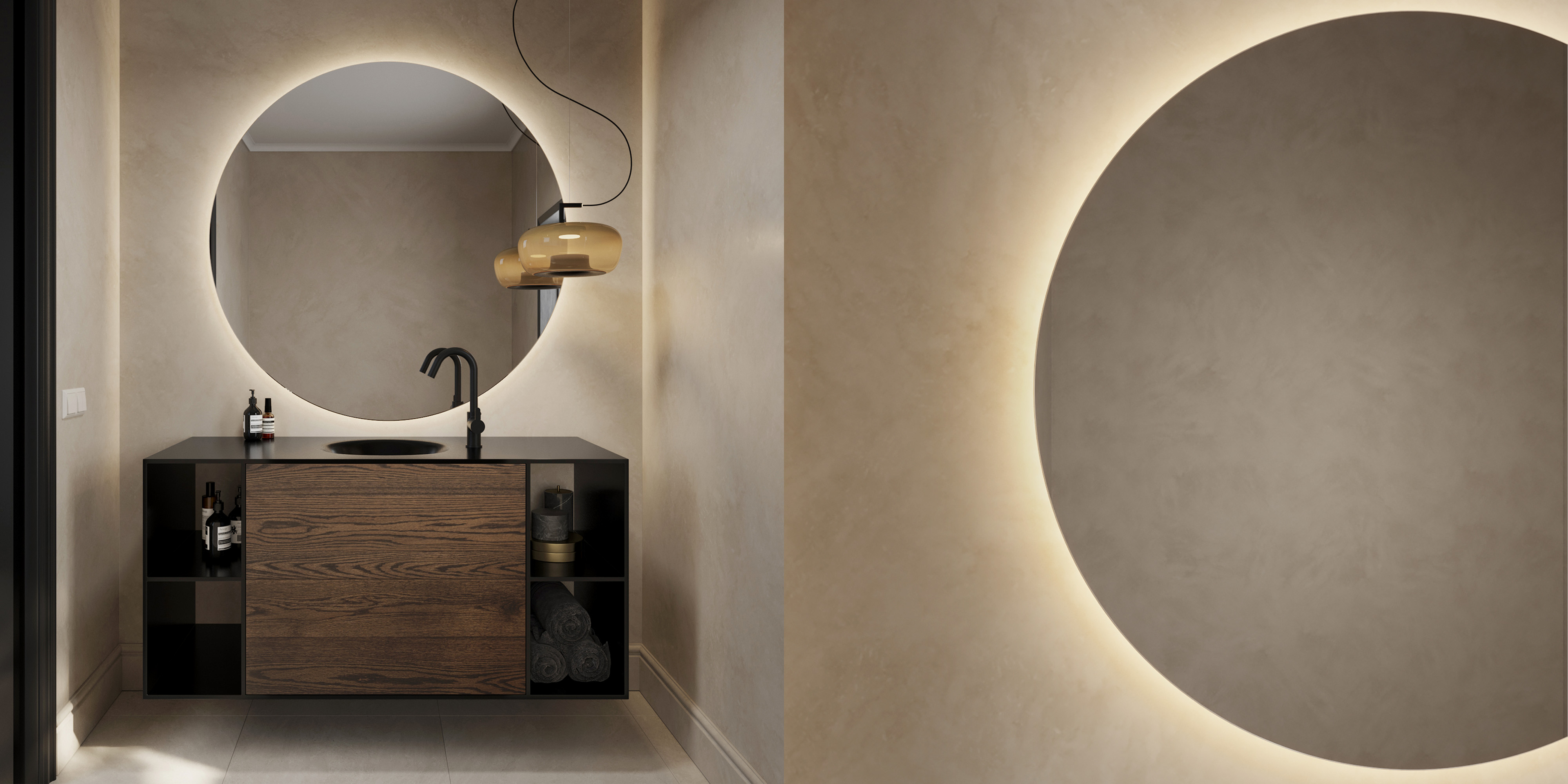
Round mirrors soften the rigid lines of vanities, tiles or frameless showers, introducing a sense of calm and movement. Ideal above single vanities, or paired with wall sconces or placed opposite arched windows and doors.
Rectangular Bathroom Mirrors

The classic choice for a reason: straightforward, clean and endlessly adaptable. Their strong lines echo the geometry of vanities and walls, promoting a sense of order. Wide formats maximise light and tall, vertical versions can visually lift the ceiling, making smaller rooms feel taller and grander.
Oval/Arched Bathroom Mirrors
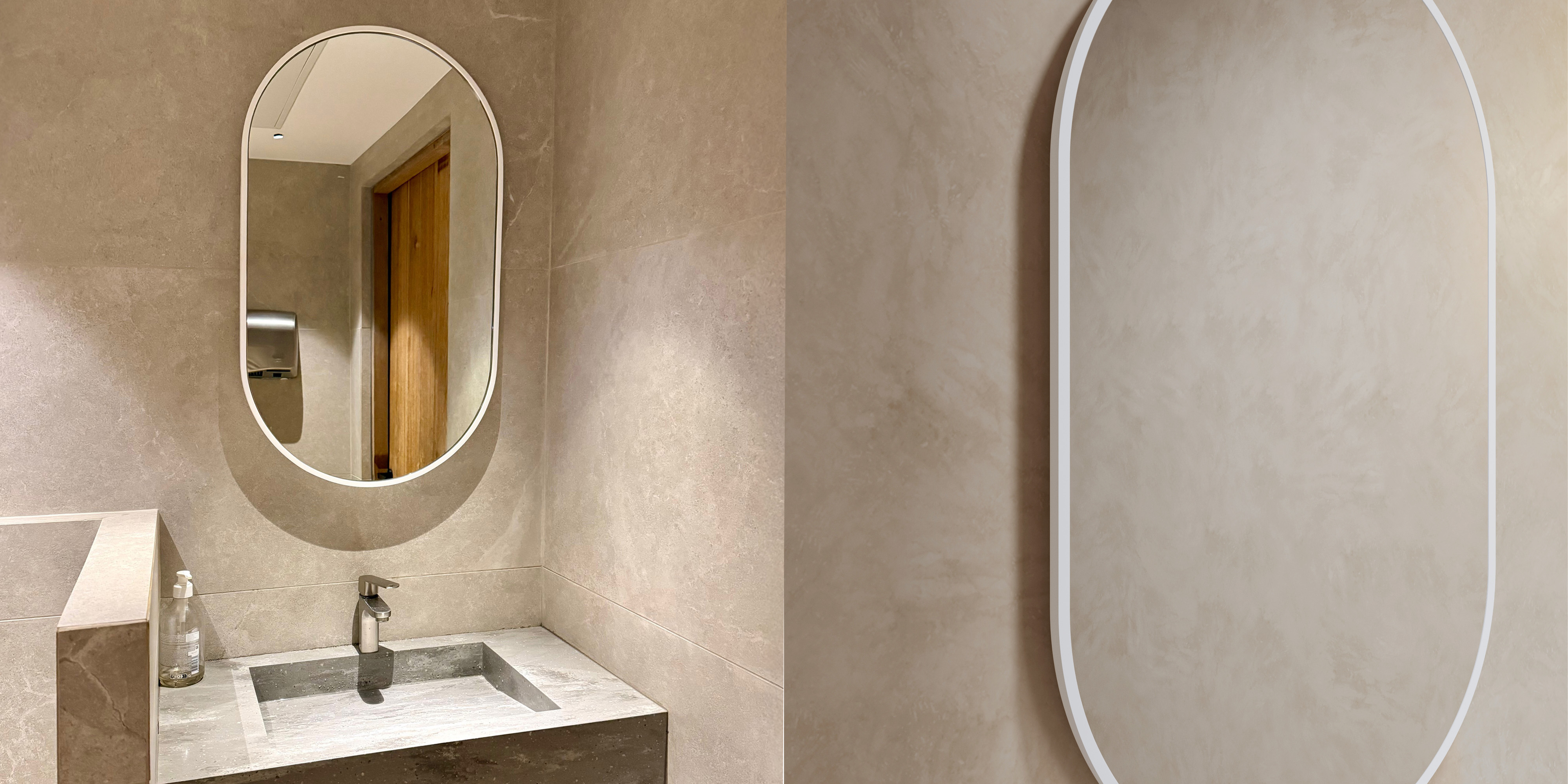
These shapes bring a touch of architectural grace. An arch naturally draws the eye upward, adding grandeur, while an oval offers a softer, more structured alternative to a circle. Wonderful in powder rooms or bathrooms with lighting fixtures or tile patterns with existing curves.
Asymmetric & Organic Bathroom Mirrors
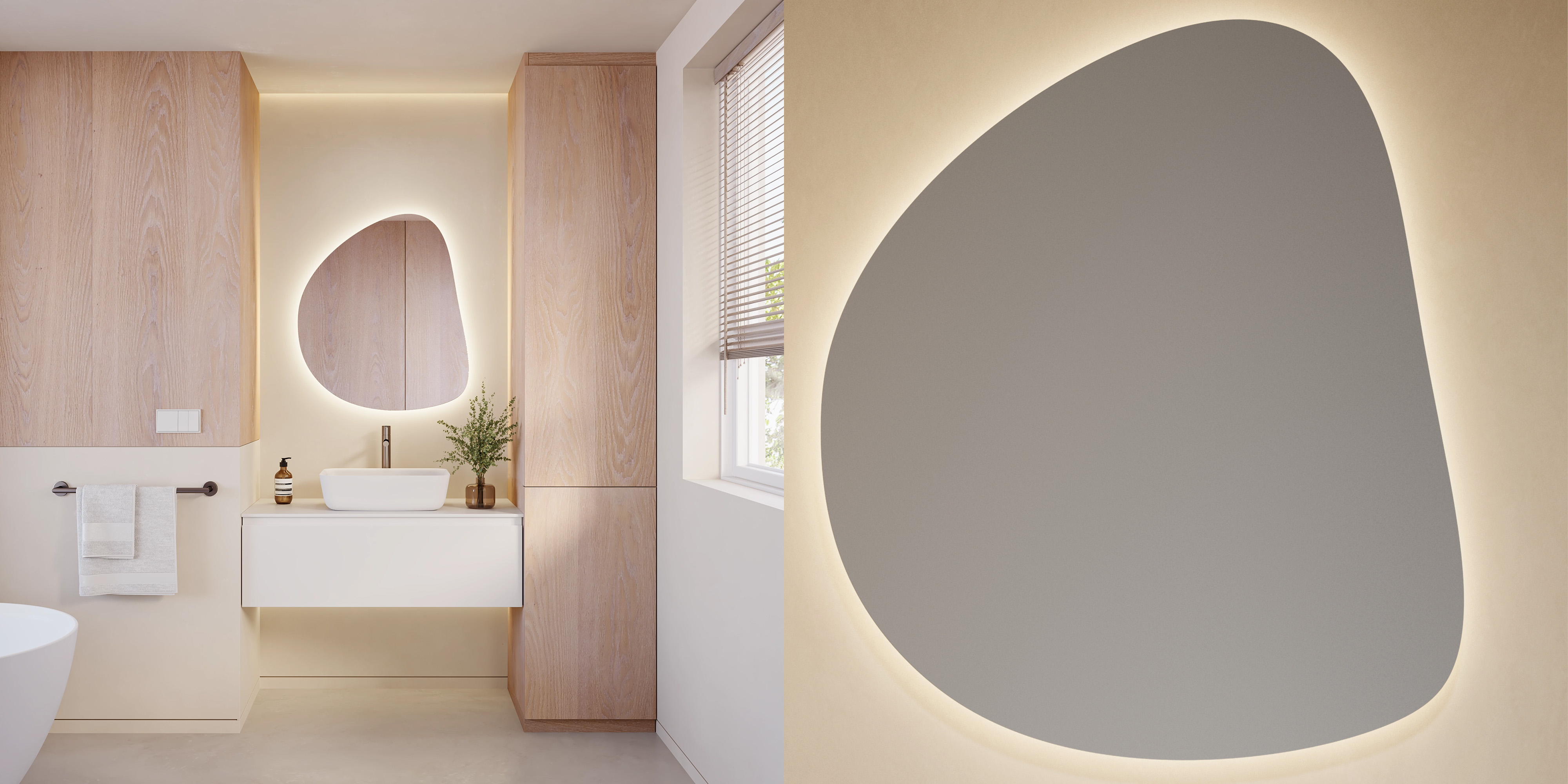
Organic design is having a moment in interiors – soft, irregular lines that feel closer to nature and less constrained by geometry. In mirrors, these shapes add a sculptural note, turning a functional piece into a gentle focal point. They bring a sense of ease and fluidity, especially effective in minimalist bathrooms where a single statement piece can define the mood.
Functional Features that Elevate your Mirror
A bathroom mirror isn’t only about how it looks – it’s about how it works, day after day. The right features can turn a beautiful surface into an indispensable tool, making your morning routine smoother and your space more comfortable.
LED Lighting & Colour Temperature
Light doesn’t just illuminate – it sets the tone of the room. Integrated LEDs provide both function and atmosphere, whether as a soft halo from behind or a crisp, shadow-free glow from the front.
The key choice is colour temperature:


- Warm White (~3200K): This light creates a cosy, inviting glow perfect for relaxing baths or soft evening lighting. It is less ideal for tasks requiring precise detail, like makeup application.
- Neutral White (~4300K): This option offers a natural, balanced light that mimics daylight for accurate colour reflection. It’s the versatile choice for everyday routines like shaving and skincare.
- Cool White (~6000K): Ultra-crisp and precise for detailed tasks like makeup blending or brow grooming. It’s also perfect for energising morning routines or windowless bathrooms.
The best of all worlds – some modern bathroom mirrors feature adjustable colour temperature, allowing you to switch between these settings with a simple touch. For added convenience, some models include a memory function that conveniently recalls your last used setting.
Anti-Fog (Demister) Mirrors
There’s nothing more frustrating than stepping out of the shower to a completely fogged-up mirror. An integrated demister pad is a game-changer of a feature.
- How it works: All Riluxa mirrors with demister pads use a thin, flexible heating film for reliable, clear vision. When activated, it gently warms the surface to prevent condensation from forming, ensuring your reflection is always clear the moment you need it.
- Why it's worth it: It eliminates the need to wipe down the glass (preventing streaks) or wave a towel frantically to clear a patch. It’s the ultimate luxury for convenience and maintains the mirror's pristine look.
Bathroom Mirror FAQs
While there's no single rule, the most functional approach is to ensure the mirror works for all users. Hang it so the bottom edge is 5–10cm above the basin to avoid splashes, and position the top edge at least 15–20cm above the tallest user’s head. This guarantees a full reflection for everyone without straining.
For the most balanced look, aim for a mirror that’s about 70–80% the width of the vanity beneath it. For example, if your vanity is 100cm wide, a mirror around 70–80cm will look proportionate.
Proper care will keep your mirror looking its best for years. For daily cleaning, a soft, damp microfiber cloth is usually sufficient. Avoid abrasive cleaners. For a complete guide on preserving your mirror’s finish and features, see our detailed mirror care guide.
Surprisingly, larger mirrors are often better. A wall-to-wall mirror can double the sense of space and reflect more light, making a small bathroom feel much more open. For added utility, a mirrored cabinet offers storage without sacrificing reflection.
Yes, this is essential. Bathroom-specific mirrors should be designed to withstand humidity. If the mirror includes lighting, look for an IP44 rating or higher, which ensures protection against moisture and splashes.
If you frequently shower in a steamy bathroom, yes. They eliminate the daily annoyance of wiping down your mirror and keep the glass crystal clear, even in heavy steam.